
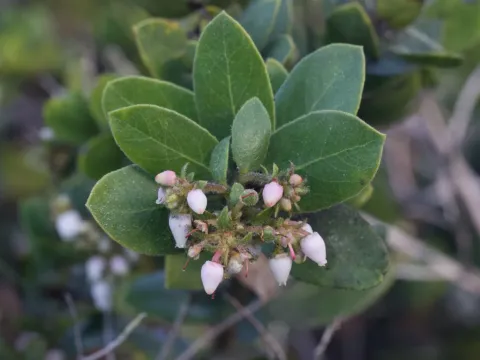
Woolly manzanita
Arctostaphylos tomentosa
Woolly manzanita (Arctostaphylos tomentosa) is an evergreen shrub belonging to the Ericaceae family. It is native to the coastal regions of North America, particularly adapted to the Mediterranean-like climate of California.
What the section contains
Woolly manzanita
This species thrives in well-drained, acidic, and rocky or sandy soils. It is essential to avoid poorly draining clay soils, as the roots are highly susceptible to rot under conditions of excessive moisture.
Regarding climate, the plant requires full sun exposure to flourish. It is a highly drought-tolerant shrub, making it an excellent candidate for xeriscaping and low-maintenance ornamental gardening in arid zones.
Botanically, it is distinguished by the dense, woolly-like hairs on its young stems and leaves. The foliage remains deep green throughout the year, providing a consistent aesthetic appeal to the landscape.
In terms of usage, it serves as a valuable plant for soil stabilization on hillsides. Its ability to thrive in poor soils and dry conditions makes it an ecological asset for habitat restoration projects.
The primary threats to Arctostaphylos tomentosa include fungal pathogens such as Phytophthora. These diseases are most common in garden settings where irrigation practices do not account for natural drainage needs.
Leaf spot diseases may occur if the foliage remains wet for extended periods in humid environments. Ensuring proper spacing and airflow is the most effective preventative cultural practice.
Insects like aphids and spider mites can occasionally affect the growth of young shoots. These pests are usually managed by maintaining overall plant vigor and utilizing biological controls if necessary.
It is crucial to avoid excessive nitrogen fertilization, as this can encourage soft, succulent growth that is more prone to pest attacks and susceptibility to drought stress.
Regular inspection of the root collar and lower branches is recommended to detect any signs of decay or fungal mats. Early intervention can save the shrub if a problem is caught before system-wide decline.