
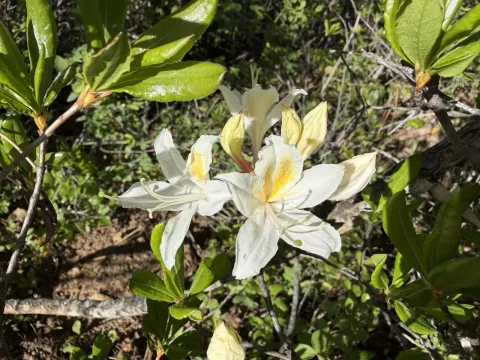
Western azalea
Rhododendron occidentale
The Western azalea, scientifically known as Rhododendron occidentale, is a deciduous shrub belonging to the Ericaceae family. Native to western North America, it thrives in environments that offer filtered sunlight and ample air circulation, making it a prized specimen for temperate gardens.
What the section contains
Western azalea
This species requires acidic, well-draining soil rich in organic matter. Gardeners should ensure the growing medium is peat-based or heavily amended with pine needles to maintain a low pH level, which is essential for the plant's nutrient uptake and overall vigor.
Watering practices are critical for the health of this rhododendron. It demands consistent moisture but cannot tolerate waterlogged conditions, which can lead to root suffocation and decay. Providing soft water is highly recommended to avoid the buildup of minerals that increase soil pH.
Botanically, the plant is recognized for its large, fragrant, white to pinkish trumpet-shaped flowers featuring a striking yellow flare. The leaves are deciduous, lance-shaped, and add seasonal interest, contributing to the structural elegance of any landscape design.
In terms of garden application, it is commonly used in woodland settings or as an ornamental centerpiece in acidic-soil garden beds. Its ability to grow quite large makes it a substantial choice for larger garden spaces seeking a naturalized, wild aesthetic.
The primary threats to Rhododendron occidentale include fungal diseases such as Phytophthora root rot. These pathogens flourish in stagnant, poorly drained soil, emphasizing the absolute necessity of selecting sites with excellent drainage before planting.
Common insect pests include the rhododendron lace bug and spider mites. These pests typically congregate on the undersides of leaves, causing discoloration and weakening the plant's photosynthetic capacity, which leads to reduced flower production.
Integrated pest management, including regular visual inspection and the application of horticultural oils or targeted insecticides, is essential. Monitoring should be most intensive during the warm months when these pests are most active.
To prevent disease outbreaks, maintenance should focus on avoiding overhead watering, which keeps foliage wet and promotes fungal growth. Instead, irrigation should be directed toward the root zone using drip or soaker methods.
Applying a thick layer of organic mulch around the base of the shrub helps maintain even soil moisture and temperature. However, ensure the mulch does not come into direct contact with the stem to prevent collar rot and potential pest harborage.