
Rhododendron trichanthum
Rhododendron trichanthum
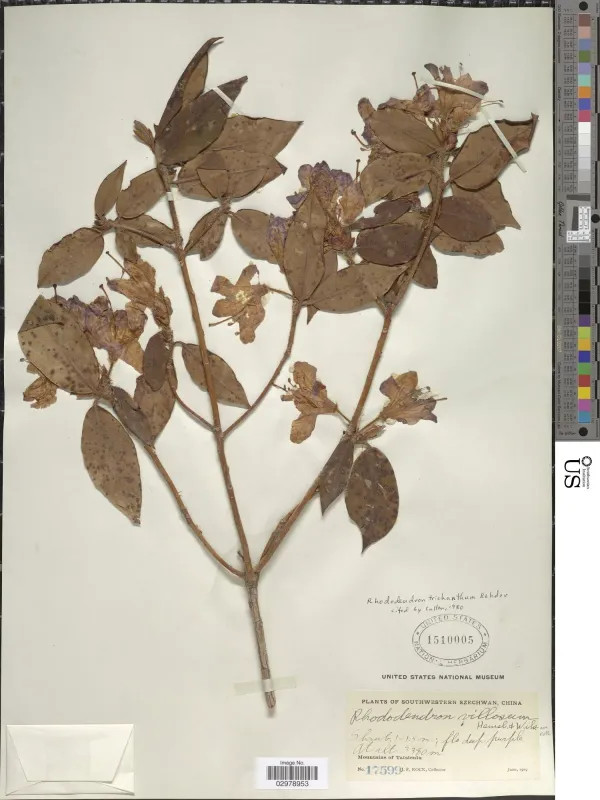
Description
Growing requirements
Rhododendron trichanthum is an ornamental shrub belonging to the Ericaceae family, native to the mountainous regions of Sichuan, China. It is valued in horticultural circles for its unique texture and foliage, which is often characterized by a distinctive hairiness, as its name suggests.
This shrub grows best in temperate, humid environments that replicate the conditions of high-altitude forests. It requires a partially shaded location that offers protection from harsh midday sun and strong, dry winds, which can easily damage its leaves.
Regarding soil, this species demands an acidic environment with a pH range between 4.5 and 5.5. The growing medium must be loose, well-draining, and rich in organic matter to support its delicate, shallow root system, which is prone to suffocation if the soil becomes compacted or waterlogged.
Regular irrigation is vital, using only lime-free water to prevent soil alkalinity, which can cause leaf yellowing and nutrient deficiencies. A thick layer of organic mulch, such as pine needles, is recommended to conserve moisture and protect roots from temperature fluctuations.
- Use of specialized acidic fertilizer for ericaceous plants.
- Manual removal of spent flower heads to encourage growth.
- Sheltered planting sites to avoid winter frost damage.
Main diseases and pests
The primary threats to Rhododendron trichanthum are fungal infections, most notably Phytophthora root rot, which is typically triggered by excessive soil moisture and poor drainage. Ensuring the plant is not sitting in stagnant water is the best preventative measure.
Insects like the rhododendron lace bug and spider mites are common pests that feed on the undersides of the leaves. Their presence is marked by stippling or discoloration, which can significantly reduce the aesthetic value of the shrub if left untreated.
Effective management involves consistent monitoring of the foliage and early intervention with appropriate fungicides or horticultural soaps. It is essential to treat both the upper and lower surfaces of the leaves when applying pesticides.
Maintenance of overall plant vigor is key to resisting infestations. Providing adequate spacing between plants improves airflow, significantly reducing the likelihood of humidity-related fungal issues.
In conclusion, successful cultivation requires a disciplined approach to moisture management and early pest detection to ensure the plant thrives in the garden for many years.