
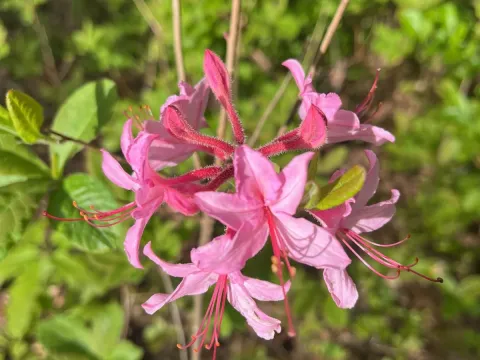
Roseshell azalea
Rhododendron prinophyllum
Rhododendron prinophyllum, commonly known as the Roseshell azalea, is primarily propagated through seeds or cuttings. Seeds should be sown in late winter or early spring using a sterile, well-draining peat-based medium.
What the section contains
Roseshell azalea
The seeds are minute and require surface sowing without being buried. Maintaining high humidity is critical, so containers must be covered with plastic or glass to create a stable germination environment.
Germination typically takes three to four weeks under consistent temperatures around 20 degrees Celsius. Seedlings need bright, indirect light to develop sturdy growth during the initial stages.
Transplanting seedlings requires extreme care due to their delicate, fine roots. They should be moved into individual pots as soon as they are large enough to handle safely.
Propagation via softwood cuttings is best performed in early summer, utilizing hormone rooting powders and a propagation case to ensure success in vegetative reproduction.
The Roseshell azalea is a member of the Ericaceae family and is native to North America. It is a deciduous shrub highly valued for its fragrant, pinkish flowers in naturalistic garden designs.
The crop demands highly acidic soil with a pH between 4.5 and 5.5. In gardens with neutral or alkaline soil, it must be grown in raised beds or containers filled with a specialized ericaceous compost mix.
A location with dappled shade is ideal, as direct, intense sunlight can scorch the foliage and dry out the sensitive root zone. It prefers sites protected from harsh, drying winds.
Irrigation must be performed with soft water, as tap water containing high levels of calcium will quickly alter soil pH and inhibit nutrient uptake by the roots.
Mulching is essential for this plant. A layer of pine bark or leaf mold helps retain soil moisture and naturally improves the acidity of the growing environment over time.
Fungal diseases, specifically Phytophthora root rot, are the most significant threats to this species. These occur predominantly in poorly drained soils where water accumulates around the root crown.
Lace bugs are common pests that feed on the underside of the leaves, causing stippling or bronzing. Regular monitoring is necessary to prevent severe infestations during the growing season.
Spider mites can become a nuisance during hot, dry spells. Keeping the surrounding area humid and ensuring the plant is not under drought stress helps prevent outbreaks of these pests.
Chlorosis, indicated by yellowing leaves with green veins, is a classic symptom of iron deficiency caused by high pH levels in the substrate, requiring immediate soil amendment.
Sanitation practices, such as removing fallen leaves and pruning dead wood, are vital to reducing the overwintering sites for fungal spores and insect pests within the garden plot.