
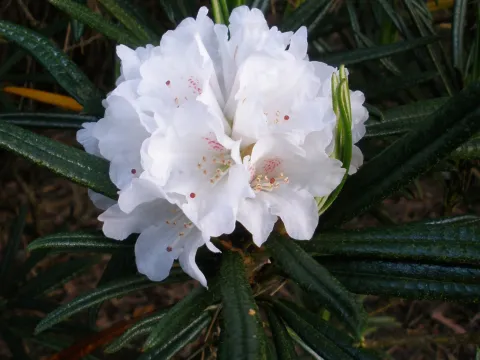
Roxie's Rhododendron
Rhododendron roxieanum
Rhododendron roxieanum is a distinct evergreen shrub belonging to the Ericaceae family. It is highly regarded for its narrow, pointed leaves which feature a dense, tawny felted underside, creating a unique texture in garden settings.
What the section contains
Roxie's Rhododendron
Originating from the high-altitude regions of China, particularly in Yunnan and Sichuan, this species thrives in cool, alpine environments where moisture is abundant and the air is fresh.
The success of this culture depends entirely on the soil profile. It requires acidic soil (pH 4.5–5.5) that is rich in organic matter, loose, and exceptionally well-draining to prevent root asphyxiation.
In terms of light, it prefers partial shade. Excessive exposure to direct sun, especially in warmer climates, can cause severe stress to the foliage and stunted growth.
Proper aeration of the soil is critical. Gardeners often use a thick layer of pine bark mulch to maintain soil temperature, conserve moisture, and suppress weed growth around the shallow root zone.
Phytophthora root rot is the primary threat to this species, usually triggered by poor drainage or overly heavy, waterlogged soil conditions during wet seasons.
Pests such as rhododendron bugs, lace bugs, and spider mites can cause significant damage to the leaves by sucking sap, resulting in stippling and eventual necrosis of the foliage.
Nutrient deficiency, specifically manifesting as interveinal chlorosis, is a common issue when the soil pH rises above the optimal acidic range, blocking nutrient uptake.
Management of these threats involves regular monitoring of leaf undersides and the application of organic or chemical treatments specifically designed for acid-loving ornamental shrubs.
Cultural control, such as removing fallen leaves and maintaining proper spacing to ensure airflow, remains the most effective long-term strategy for preventing disease outbreaks.