
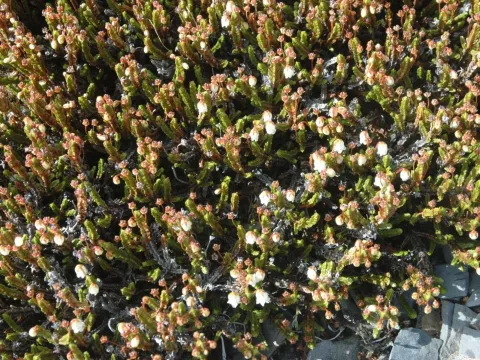
Rocky Mountain Cassiope
Cassiope saximontana
Rocky Mountain Cassiope (Cassiope saximontana) is a perennial, evergreen shrub belonging to the Ericaceae family. It is a slow-growing alpine species native to high-altitude rocky environments in North America, known for its distinct scale-like foliage.
What the section contains
Rocky Mountain Cassiope
The plant exhibits typical heath-like growth, forming dense mats that are well-adapted to surviving the winter dormancy under deep snow cover. Its ability to thrive in thin, nutrient-poor, and highly acidic soils makes it a prized specimen for specialized rock gardens.
Climate requirements are stringent: it thrives in cool, humid environments and dislikes intense heat or dry air. Successful cultivation requires a location that mimics alpine conditions, usually involving protection from the scorching afternoon sun and constant soil moisture.
The soil profile must be specifically prepared with a high content of organic peat or leaf mold, mixed with grit to ensure rapid drainage. Any accumulation of stagnant water will lead to crown rot, making proper site selection and soil preparation the primary tasks for the grower.
In terms of economic and practical use, Cassiope saximontana is exclusively an ornamental crop. It is highly valued in the nursery industry for its aesthetic contribution to rockeries and tundra-style landscapes, offering a unique texture and beautiful white blooms.
Fungal pathogens represent the most significant threat to this species, particularly under conditions of poor air circulation and excessive humidity in late spring. Maintaining a dry, airy environment around the foliage is the best preventative strategy against leaf spots.
Pests are generally not a major concern; however, scale insects and spider mites can occasionally affect the plant in greenhouse conditions. Vigilance and the use of insecticidal soaps are recommended if infestation symptoms appear, ensuring that the plant remains healthy for the growing season.