
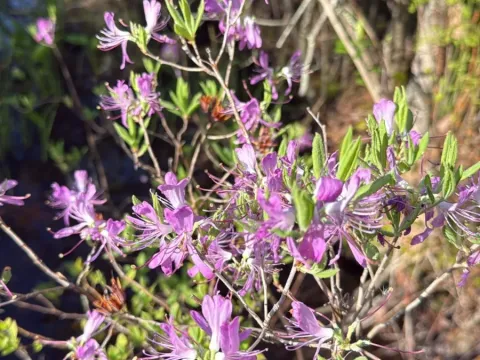
Rhodora
Rhododendron canadense
Rhododendron canadense, commonly known as Rhodora, is a deciduous shrub belonging to the Ericaceae family. It is native to eastern North America, frequently found in moist thickets, swamps, and along stream margins.
What the section contains
Rhodora
The plant is highly valued for its early spring blooms, where delicate, two-lipped, rose-purple flowers appear before the foliage develops. This species typically reaches a height of 0.5 to 1 meter, making it suitable for small landscapes.
The species is exceptionally cold-hardy, thriving in environments where other rhododendrons might struggle. It is fully adapted to the harsh winters of its native Canadian and northeastern American ranges.
Successful cultivation requires acidic soil with a pH between 4.5 and 5.5. A mixture of peat moss, pine bark, and sand provides the ideal structural environment for the plant's fine, fibrous root system.
Consistent soil moisture is essential for the Rhodora. The shrub does not tolerate drought, and the use of organic mulch such as pine needles is recommended to maintain cool, damp root conditions throughout the growing season.
Common fungal pathogens include Phytophthora root rot, which is triggered by poor drainage. Providing excellent drainage during the initial planting phase is the most effective preventive measure.
Pests such as lace bugs can cause foliage disfiguration, resulting in yellowing and stunted growth. These insects thrive in warm, dry conditions, making consistent watering a deterrent.
Leaf spot diseases are another potential threat, especially in humid climates with poor air circulation. Proper spacing between shrubs ensures that foliage dries quickly after rainfall.
Regular maintenance, including the removal of dead wood and damaged branches, helps manage potential disease reservoirs within the shrub canopy.
For chemical control, targeted horticultural soaps or systemic insecticides should be applied only if monitoring indicates a significant infestation, always following manufacturer labels.