
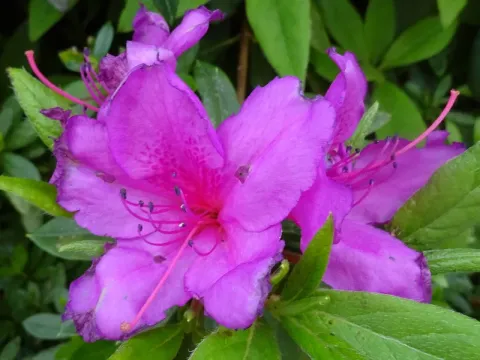
Rhododendron Oomurasaki
Rhododendron oomurasaki
Rhododendron Oomurasaki is a stunning cultivar belonging to the Ericaceae family, widely appreciated for its vigorous growth and vibrant floral display. Originating from Japanese breeding programs, it thrives in temperate climates where high humidity and moderate temperatures prevail.
What the section contains
Rhododendron Oomurasaki
Successful cultivation requires soil with a distinct acidic reaction, ideally between pH 4.5 and 5.5. The planting site must offer excellent drainage, as the fine root system of this species is highly susceptible to root rot caused by stagnant water.
Exposure to dappled shade is preferred over full sun, especially during the intense heat of the afternoon. A wind-sheltered location prevents excessive foliage transpiration and protects the plant from desiccation throughout the year.
Consistent moisture is essential, which is best achieved through thick organic mulching with pine needles or bark. This practice not only retains moisture but also helps maintain the necessary soil acidity as the organic matter decomposes.
In landscaping, this variety serves as a magnificent centerpiece or part of a mass planting in woodland-style gardens. Its semi-evergreen foliage provides interest even outside the flowering season, making it a staple for diverse ornamental designs.
Phytophthora root rot remains the most serious threat to Rhododendron Oomurasaki, typically occurring in poorly drained soils. Prevention through soil amendment and proper elevation of the planting bed is far more effective than chemical treatment.
Pests like lace bugs and spider mites frequently infest the underside of leaves, causing discoloration and eventual drop. Integrated pest management, including regular scouting and horticultural oils, is recommended for effective control.
Iron chlorosis is a common physiological problem caused by high soil pH or poor nutrient availability. Soil acidification through sulfur application or chelated iron foliar sprays can often rectify this yellowing condition.
Winter care is vital in northern climates where extreme cold can desiccate the evergreen leaves. Providing physical protection and ensuring the soil is well-hydrated before the ground freezes are standard protective measures.
Regular maintenance involves light pruning after flowering to maintain the desired shape and size. Deadheading spent blossoms allows the plant to redirect its energy toward vigorous growth and bud set for the following spring.