
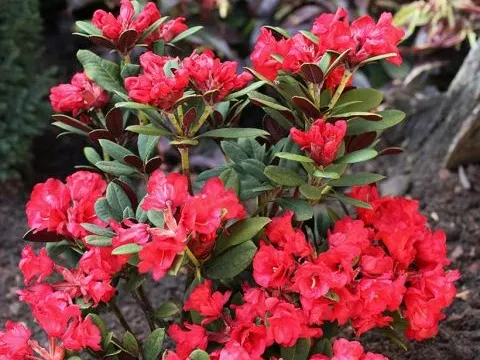
Rhododendron neriiflorum
Rhododendron neriiflorum
Rhododendron neriiflorum is a distinctive species within the Ericaceae family. Originating from the high-altitude regions of the Himalayas, Tibet, and Yunnan, this evergreen shrub is prized for its compact structure and vibrant, bell-shaped scarlet flowers.
What the section contains
Rhododendron neriiflorum
The plant features leathery, elliptical leaves with a characteristic white or brownish indumentum on the underside. Its botanical adaptation to subalpine environments makes it a hardy yet demanding specimen in cultivated garden settings.
Cultivation requires highly acidic soil with a pH range of 4.5 to 5.5. Incorporating organic matter such as peat moss, pine needles, or well-rotted leaf mold is essential for providing the necessary drainage and nutrients the shallow root system requires.
These shrubs thrive in partial shade conditions, mimicking their native mountain forest understories. Exposure to harsh afternoon sun is generally detrimental, as it can desiccate the foliage and diminish the overall vitality of the plant during hot summer months.
Consistent moisture is critical for the success of Rhododendron neriiflorum. Gardeners should prioritize maintaining a cool, humid root environment by applying a thick layer of mulch, which protects the sensitive roots from temperature fluctuations and evaporation.
Rhododendron bugs are among the most common pests, causing leaf discolouration and stippling. Integrating biological control methods or systematic insecticides during the spring growth phase is recommended to keep pest populations at manageable levels.
Phytophthora root rot is a severe threat usually caused by waterlogged soils or inadequate drainage. Preventing this involves selecting well-draining garden sites and strictly avoiding deep planting, which ensures that the root collar remains dry and healthy.
Leaf spot diseases often occur due to poor air circulation or extended periods of damp weather. To mitigate this risk, pruning should be conducted to encourage airflow within the shrub canopy, and diseased foliage should be promptly removed and disposed of.
Spider mites can proliferate in dry, sheltered conditions, particularly during late summer. Regularly spraying the underside of the foliage with water or using horticultural oils can effectively disrupt their lifecycle without harming the plant's decorative appearance.
Proper winterization is vital for non-native specimens. Applying a winter mulch and using burlap screens to protect the plants from desiccant winter winds and intense early-spring sun will help preserve the evergreen foliage through the dormant season.