
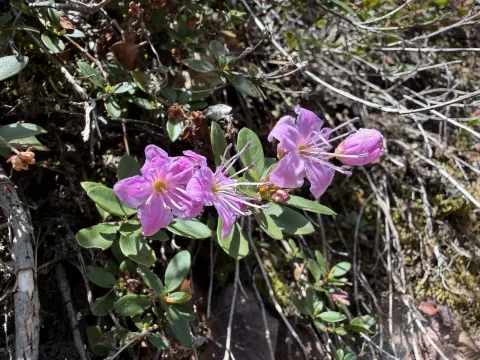
Kalmiopsis fragrans
Kalmiopsis fragrans
Kalmiopsis fragrans is a rare evergreen shrub belonging to the Ericaceae family. It is a geographically restricted species, primarily native to specific rocky habitats in southwestern Oregon, USA, making it a highly valued specimen for botanical enthusiasts.
What the section contains
Kalmiopsis fragrans
Botanically, this shrub is characterized by its compact habit, leathery foliage, and fragrant, rose-colored flowers that emerge in late spring. Its unique floral structure is a point of interest for both taxonomists and garden designers looking for distinctive textures.
Cultivation success relies heavily on mimicking the plant's native habitat. It requires acidic, nutrient-rich, and extremely well-draining soil. Drainage is the most critical factor, as stagnant moisture quickly leads to root failure in this species.
Regarding climate, it prefers partial shade, avoiding harsh direct sunlight, especially in the afternoon. Protection from wind is essential to prevent moisture loss through the evergreen leaves during both summer heat and winter cold snaps.
In landscaping, it is utilized as an ornamental feature in rock gardens or specialized heath beds. Because of its slow growth rate and specific environmental needs, it is primarily managed in controlled environments or by experienced gardeners.
Root rot, often caused by Phytophthora species, is the primary threat to the health of Kalmiopsis fragrans. These pathogens thrive in poorly drained environments and can be fatal to the shrub in a very short period.
Spider mites represent the most common pest threat, particularly during periods of low humidity or drought. These mites can significantly degrade the foliage quality and weaken the overall plant vigor if left untreated.
Powdery mildew may occur if the shrub is planted in an area with poor air circulation. Proper spacing and thinning out branches are necessary cultural practices to maintain foliage health and prevent fungal outbreaks.
Improper pH levels are a major non-pathogenic threat. If the soil becomes too alkaline, the plant will suffer from nutrient lockout, manifesting as severe chlorosis, which eventually stunts development and shortens the plant's lifespan.
Aphids can occasionally colonize young shoots during the active growing season. While usually not lethal on their own, they should be managed early to prevent the secretion of honeydew, which can attract secondary sooty mold infections.