
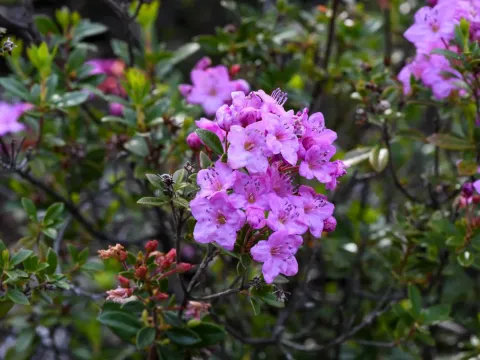
Kalmiopsis leachiana
Kalmiopsis leachiana
Kalmiopsis leachiana is a rare, slow-growing evergreen shrub belonging to the Ericaceae family. Native to the Siskiyou Mountains of Oregon, it is highly valued by botanists and specialized gardeners for its distinct botanical characteristics.
What the section contains
Kalmiopsis leachiana
The plant requires extremely well-drained, acidic soil. A mixture typically consisting of peat moss, pine needles, and grit provides the necessary environment to mimic the plant's natural rocky, alpine habitat.
Cultivation should take place in locations with dappled shade. Exposure to intense afternoon sun often results in desiccated foliage, whereas deep shade restricts the energy production needed for blooming.
Humidity and air circulation are vital for the health of Kalmiopsis leachiana. It thrives in cool, moist summers and requires protection from hot, drying winds that can stress the evergreen leaves.
Irrigation management is essential. Using lime-free or acidified water is necessary to prevent a rise in soil pH, which would otherwise inhibit nutrient uptake and potentially lead to plant decline.
Root rot is the most significant threat to this species, primarily caused by waterlogged soil conditions. Proper drainage is the primary defense against pathogens like Phytophthora that thrive in wet, stagnant earth.
Spider mites are the most common pest found on Kalmiopsis leachiana, especially in dry garden environments. These pests feed on sap, leading to foliage stippling and eventual leaf drop if left unchecked.
Physiological chlorosis often occurs if the soil acidity is not properly maintained. The leaves may turn yellow while veins remain green, signaling a need for an iron supplement or soil acidification.
Scale insects can occasionally infest the stems, requiring manual removal or application of specialized horticultural oils. Monitoring the plant during the active growing season is recommended.
Ensuring good spacing between plants prevents the development of fungal leaf spots by allowing adequate airflow, which is critical for maintaining the overall vigor of this sensitive ericaceous shrub.