
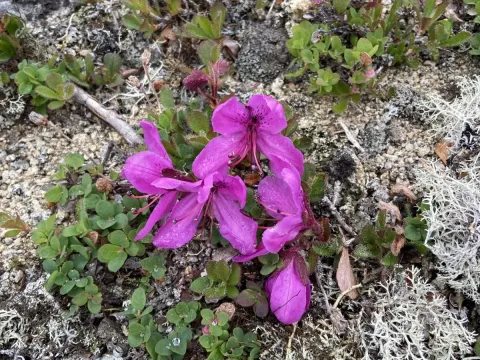
Kamchatka rhododendron
Rhododendron camtschaticum
Kamchatka rhododendron (Rhododendron camtschaticum) is a deciduous dwarf shrub belonging to the Ericaceae family. Native to the harsh arctic-alpine environments of Eastern Asia and Alaska, this plant is well-adapted to cold climates, forming low, spreading mats that typically do not exceed 30 cm in height.
What the section contains
Kamchatka rhododendron
Success in cultivation requires mimicking its natural habitat, which entails cool summer temperatures and protection from intense heat. It thrives best in partial shade, as prolonged exposure to direct midday sun can easily stress the root system and scorch the delicate foliage.
The soil must be highly acidic, well-draining, and rich in organic matter. A mixture consisting primarily of peat moss, pine needles, and perlite is ideal for providing the necessary aeration and moisture retention. Heavy, clay-based, or alkaline soils should be strictly avoided.
Cultivation practices involve regular irrigation to ensure the soil remains moist but never waterlogged. Applying a layer of pine bark mulch around the plant is crucial; it helps maintain soil acidity, suppresses weeds, and keeps the root zone cool during periods of rising temperatures.
In landscaping, this species is highly valued for its intense magenta-pink flowers and horizontal growth habit. It serves as an excellent choice for rock gardens, alpine beds, or as a foreground feature in heather landscapes where its miniature size can be fully appreciated.
The primary threats to Rhododendron camtschaticum are fungal pathogens, particularly root rot, which occurs when drainage is insufficient. Keeping the soil well-aerated is the most effective preventive measure against such diseases.
Pests such as spider mites and aphids are occasionally problematic, especially if the plants are situated in areas with poor airflow. These pests weaken the plant by feeding on sap, often leading to discoloration and premature defoliation of the leaves.
Regular monitoring of the foliage is essential to detect pest activity early. If necessary, targeted applications of horticultural oils or organic insecticidal soaps can manage outbreaks without harming the beneficial insects in the garden ecosystem.
Nutrient deficiencies, particularly iron chlorosis, can manifest in alkaline or poorly managed soils. If leaves turn yellow while the veins remain green, applying a chelated iron supplement is recommended to restore plant vigor.
Winter care is generally minimal due to the plant's natural hardiness. However, protecting against excessive freezing and thawing cycles by ensuring adequate snow cover or light organic cover can further improve plant resilience in exposed garden sites.