
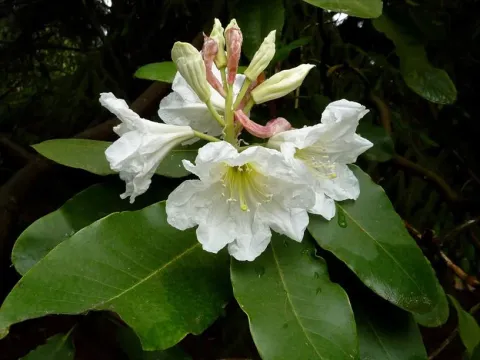
Hemsley rhododendron
Rhododendron hemsleyanum
The Hemsley rhododendron (Rhododendron hemsleyanum) belongs to the Ericaceae family and is a robust evergreen shrub or small tree. It is native to the mountainous forest regions of Sichuan and Guizhou provinces in China, where it thrives in sheltered, humid environments.
What the section contains
Hemsley rhododendron
Botanically, this species is characterized by its large, leathery leaves and impressive, fragrant white or pale pink flowers. These physical features make it a prized specimen for collectors and high-end horticultural projects across temperate regions with suitable climates.
Successful cultivation of this crop depends strictly on soil quality. The plant requires acidic soil (pH 4.5–5.5) that is well-aerated and rich in organic matter. A high-quality drainage system is essential to prevent the accumulation of water, which is the primary cause of plant loss.
In terms of environmental conditions, it favors partial shade and protection from dry winds. It is sensitive to extreme heat and heavy frost, meaning gardeners should provide winter insulation, such as pine bark mulch or protective covers, to ensure the plant's long-term survival.
Agrotechnical maintenance focuses on consistent irrigation with soft water and balanced fertilization using fertilizers specifically designed for acidophilic plants. Proper pruning should be done carefully, primarily to remove dead wood and maintain a desirable structural shape.
The primary threats include fungal diseases such as Phytophthora root rot, which thrives in saturated soil conditions. Ensuring the site is well-drained and avoiding over-irrigation are the most effective preventive measures against these pathogens.
Insect pests, including rhododendron bugs and spider mites, can significantly decrease the aesthetic value of the foliage. Integrated pest management, including regular inspection and the use of appropriate systemic insecticides, is recommended for maintaining plant health.