
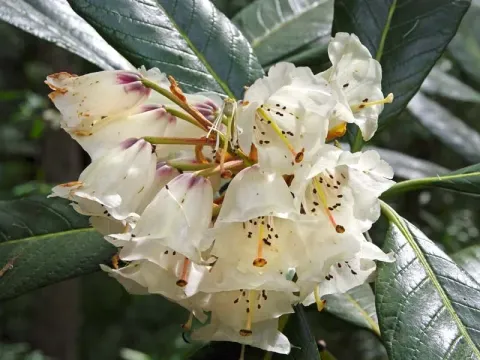
Giant Rhododendron
Rhododendron giganteum
The giant rhododendron (Rhododendron giganteum) is a prestigious member of the Ericaceae family. It is distinguished by its impressive size, often growing as a tree-like specimen in its native habitats, which sets it apart from many smaller evergreen shrub species.
What the section contains
Giant Rhododendron
Its natural distribution is limited to the mountainous forests of Yunnan, China, and adjacent parts of Myanmar. This region provides the cool, humid, and misty environment that the species requires to flourish and reach its full vegetative potential.
Success in cultivation depends on providing acidic, well-draining soil rich in organic matter. Gardeners should ensure a substrate pH ranging from 4.5 to 5.5, typically achieved by incorporating peat moss or pine bark, which also enhances soil aeration and drainage properties.
This culture thrives in dappled shade conditions, shielded from harsh direct sunlight. In landscapes, it is best positioned on the north or east side of buildings, or underneath a canopy of mature trees that provide filtered light and protect the foliage from heat stress.
General maintenance practices include the use of lime-free irrigation water and regular applications of specialized fertilizers formulated for ericaceous plants. These nutrients help maintain acidity levels and support the development of the lush foliage and floral buds typical of the species.
The primary threats to Rhododendron giganteum include fungal pathogens such as Phytophthora, which thrive in waterlogged soil. To prevent these infections, strict attention must be paid to drainage and avoiding the over-saturation of the root zone throughout the year.
Regarding insect pests, the rhododendron lace bug and spider mites are common issues that require intervention. Regular scouting of the leaf undersides and the application of appropriate horticultural oils or systemic insecticides are recommended to prevent severe damage to the plant's aesthetic quality.