
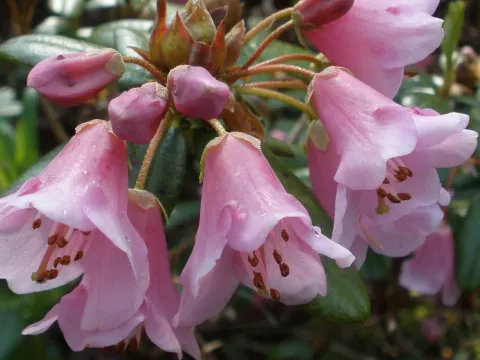
Glaucous-leaved rhododendron
Rhododendron glaucophyllum
The Glaucous-leaved rhododendron (Rhododendron glaucophyllum) is an evergreen ornamental shrub belonging to the Ericaceae family.
What the section contains
Glaucous-leaved rhododendron
Native to the Himalayan regions, this species is well-adapted to high-altitude environments characterized by cool temperatures and significant air humidity.
To ensure successful growth, the soil must be distinctly acidic with a pH ranging between 4.5 and 5.5 and rich in organic matter like peat moss.
These plants perform best in partial shade, where they are protected from intense direct sunlight which can scorch the delicate foliage.
Effective drainage is non-negotiable for this species, as their fine root systems are highly susceptible to root rot if the soil remains waterlogged.
Common pests include rhododendron leafhoppers and spider mites, which typically thrive during periods of drought and low atmospheric humidity.
Fungal diseases like Phytophthora root rot and gray mold represent significant threats, often triggered by poor site conditions or stagnant air.
Leaf chlorosis is a common physiological disorder, usually signaling a deficiency in iron caused by an incorrect soil pH or nutrient lockout.
To mitigate disease risk, it is essential to maintain proper spacing between plantings to facilitate adequate air circulation around the canopy.
Integrated pest management should include regular inspection and the application of suitable horticultural oils or fungicides as a preventive measure.