
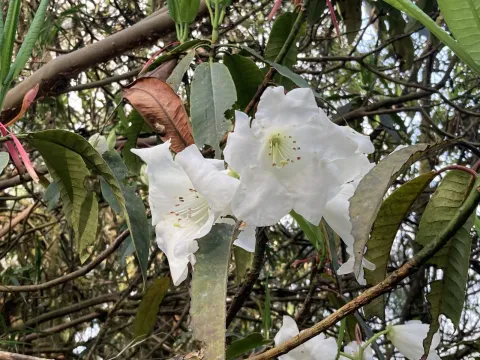
Griffith's Rhododendron
Rhododendron griffithianum
Griffith's Rhododendron (Rhododendron griffithianum) is a magnificent evergreen shrub or small tree belonging to the Ericaceae family. Known for its impressive size and large, fragrant, bell-shaped flowers, it stands out as one of the most prestigious species in the genus, often reaching significant heights in native habitats.
What the section contains
Griffith's Rhododendron
Native to the moist, temperate forests of the Himalayas, this species thrives in regions with high atmospheric humidity and cool temperatures. Its natural range encompasses Bhutan, Tibet, and parts of India, where it grows in the shelter of forest canopies, avoiding harsh direct exposure.
Cultivation success relies heavily on replicating these conditions: acidic, well-draining, and organic-rich soil is non-negotiable. The root system is shallow and fine, making it highly susceptible to waterlogging, so a sandy, peaty substrate with excellent drainage is required for healthy development.
The plant is highly valued for its large, waxy, white flowers which emit a delightful fragrance. Due to these ornamental traits, it has been widely used by horticulturists to breed hybrids that are cherished globally for their beauty and robustness in mild climates.
Maintenance requires consistent moisture and protection from strong, drying winds. Mulching with conifer bark or pine needles is a critical agronomic practice, as it preserves moisture and helps maintain the necessary low pH level of the soil, preventing common physiological stress.
Phytophthora root rot is the most serious threat to Griffith's Rhododendron, particularly in poorly drained soils. Once established, the fungus compromises the roots, leading to rapid wilting and plant death, which makes preventative drainage management the top priority for growers.
The rhododendron lace bug is a common pest that feeds on the undersides of leaves. Infestation symptoms include mottling or chlorosis of the foliage, which significantly reduces the aesthetic value of the shrub and weakens its capacity for photosynthesis during the growing season.
Iron chlorosis is a common nutrient disorder caused by alkaline soil conditions. When the pH level rises, the plant becomes unable to absorb essential iron, resulting in yellowing foliage with green veins, which can be corrected by applying chelated iron and specialized acid-loving fertilizers.
Spider mites are frequently encountered during hot, dry spells. They thrive in low-humidity environments, causing stippling and eventual browning of the leaves, which necessitates regular inspection and occasional misting of the foliage to disrupt their life cycle.
Powdery mildew can affect the foliage in overcrowded or poorly ventilated areas. Keeping the canopy open through careful pruning and ensuring appropriate spacing between plants helps to reduce humidity around the leaves, thereby limiting the growth of fungal pathogens.