
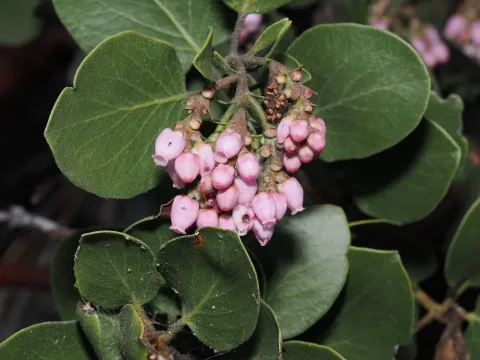
Greenleaf manzanita
Arctostaphylos patula
Greenleaf manzanita (Arctostaphylos patula) is a prominent member of the Ericaceae family. It is a hardy, evergreen shrub native to the western regions of North America, particularly flourishing in mountainous pine forests and shrublands.
What the section contains
Greenleaf manzanita
This species requires well-drained, sandy, or rocky soils to thrive. It is well-adapted to environments characterized by long, dry summers, demonstrating significant drought tolerance once the root system is well-established in the terrain.
Regarding sunlight, the plant demands full sun exposure to maintain its dense, compact structure. Planting it in shaded areas leads to leggy growth and increased vulnerability to fungal pathogens due to poor air circulation.
Soil pH preference typically leans toward slightly acidic to neutral ranges. While it can handle nutrient-poor soils, it does not tolerate waterlogged conditions, making proper soil drainage a non-negotiable requirement for successful cultivation.
Reproduction of this species is biologically unique, as seeds often exhibit dormancy. In agricultural or restoration projects, mimicking natural wildfire stratification processes is sometimes necessary to initiate germination effectively.
The primary threats to Arctostaphylos patula involve pathogens such as Phytophthora, which cause root rot and sudden wilting. These diseases are exacerbated by improper irrigation practices and poor drainage.
Leaf-feeding insects, including aphids and specialized beetles, may cause cosmetic damage or weaken young plants. Regular monitoring is essential to ensure that infestation levels do not exceed thresholds that impact plant vigor.
Fungal leaf spots are common in environments with excessive humidity or poor air movement. Sanitation practices, such as removing fallen leaves and pruning dead wood, help in preventing the spread of these fungal infections.
Another major concern is the susceptibility to certain wood-boring pests that can compromise the structural integrity of the stems, especially in plants that are already stressed by environmental factors like drought.
Implementing a comprehensive Integrated Pest Management (IPM) strategy, focusing on maintaining plant health through proper site selection and avoiding over-watering, is the most effective way to protect these shrubs.