
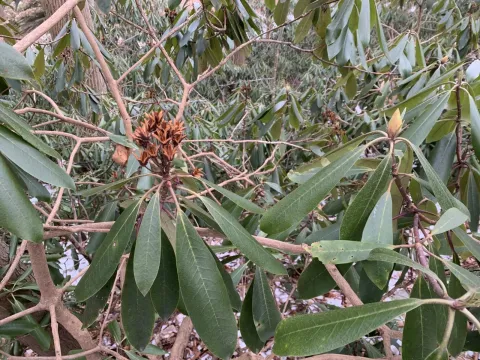
Great rhododendron
Rhododendron maximum
The great rhododendron (Rhododendron maximum) is a magnificent evergreen shrub or small tree belonging to the Ericaceae family. It is native to the eastern parts of North America, where it thrives in moist forests and along rocky streams.
What the section contains
Great rhododendron
Successful cultivation requires specific environmental conditions, primarily partial shade and protection from dry winds. The plant demands acidic, well-draining soil rich in organic matter to mimic its natural forest habitat.
Climatic requirements are focused on cool, temperate conditions with sufficient atmospheric humidity. This species is known for its cold hardiness, allowing it to survive significant winter temperatures if properly established.
Proper irrigation is critical for the health of the plant, as it cannot tolerate prolonged drought. However, gardeners must avoid waterlogging, which often leads to root rot and other physiological problems.
It is primarily used for ornamental purposes in landscape architecture, serving as an excellent specimen plant or a backdrop in shade gardens, known for its leathery foliage and clusters of large flowers.
The primary threats to the great rhododendron are fungal diseases, which often manifest as root rot or leaf spots. These infections are typically encouraged by poor soil aeration and excessive moisture levels.
Prevention involves ensuring high-quality drainage in the planting site and maintaining appropriate soil acidity, ideally within a pH range of 4.5 to 5.5, which is essential for nutrient uptake.
Insects like the rhododendron lace bug and spider mites are common pests that damage the leaves. Their presence can lead to stunted growth and a significant reduction in the plant's aesthetic value.
Integrated pest management, including the use of targeted insecticides and fungicides, is recommended for controlling severe infestations and preventing long-term damage to the plant.
Maintaining plant vitality through organic mulching and specialized fertilization contributes to a stronger defense system, making the shrub more resistant to seasonal environmental stressors and pathogens.