
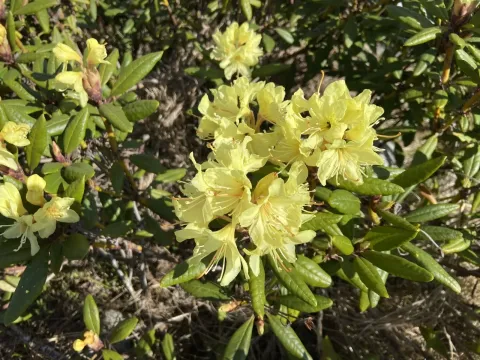
Golden rhododendron
Rhododendron aureum
The Golden rhododendron, botanically known as Rhododendron aureum, belongs to the Ericaceae family and is recognized for its ability to thrive in alpine and subalpine mountainous regions.
What the section contains
Golden rhododendron
Cultivation of this species requires specific soil conditions, specifically acidic, well-draining, and organic-rich substrates that mimic its natural mountainous habitat.
The plant demonstrates high sensitivity to light exposure; while it appreciates bright locations, it requires protection from harsh direct afternoon sun to prevent foliar scorching.
Water management is critical, as the roots require constant moisture but are highly susceptible to root rot if the soil becomes waterlogged or stagnant.
General maintenance includes annual mulching with pine bark or pine needles to stabilize soil pH levels and protect the shallow root system from extreme fluctuations in temperature.
Common pathological threats include fungal infections such as Phytophthora root rot, which typically occurs in poorly aerated or excessively wet soil environments.
Foliage health is frequently compromised by various leaf spots, which are often exacerbated by poor air circulation within the canopy of the shrubs.
Pest populations, including spider mites and rhododendron bugs, often target the leaves, leading to chlorosis, stunted growth, and a significant loss of decorative value.
Environmental stress, particularly during late winter when the soil is frozen but the sun is strong, can cause desiccation of the evergreen leaves.
Effective management strategies should focus on integrated pest control, ensuring proper drainage, and utilizing prophylactic fungicide treatments during high-risk humid seasons.