
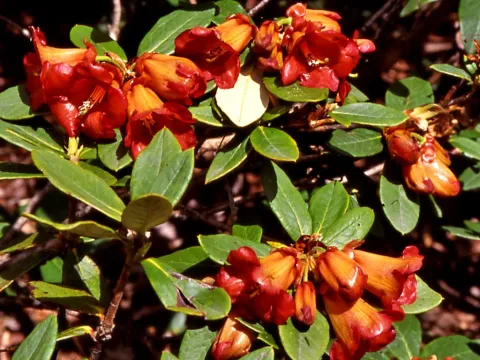
Rhododendron dichroanthum
Rhododendron dichroanthum
Rhododendron dichroanthum is a distinctive evergreen shrub species belonging to the Ericaceae family. Originally native to the high-altitude mountain slopes of Yunnan, China, and Myanmar, this species is highly valued in horticulture for its unique bicolor flowers, typically ranging from orange to salmon-pink.
What the section contains
Rhododendron dichroanthum
The plant exhibits a slow growth rate and typically develops into a compact, rounded form. Its leaves are leathery, dark green, and notably matte, with a persistent gray indumentum (hair-like covering) on the undersurface, which serves as an evolutionary adaptation to mountain climates.
Successful cultivation requires soil conditions that mimic its natural habitat: acidic (pH 4.5–5.5), well-drained, and rich in organic matter such as peat or leaf mold. The root system is shallow and fibrous, making it extremely sensitive to any soil compaction or physical disturbance.
Climate requirements involve moderate temperatures and high atmospheric humidity. In garden settings, the species performs best in semi-shaded locations protected from harsh, drying winds and direct afternoon sun, which can cause leaf scorch and dehydration.
Agrotechnical maintenance focuses heavily on consistent soil moisture. Utilizing a thick layer of organic mulch, such as pine bark or needles, is essential to regulate soil temperature and maintain the required acidic environment around the root zone.
The primary pathological threats to Rhododendron dichroanthum include fungal root rots, most notably Phytophthora, which thrive in poorly drained, waterlogged substrates. Preventing root rot is essential as it is often incurable once severe symptoms appear.
Chlorosis is a frequent physiological disorder observed when the soil pH rises above the optimal range. This condition prevents the plant from absorbing iron and other essential micronutrients, leading to yellowing of leaves with clearly visible green veins.
Pest management is centered on controlling common rhododendron pests, including the rhododendron bug (Stephanitis rhododendri) and various types of weevils. These pests can significantly disfigure the foliage and weaken the plant's overall vigor.
Spider mites represent a recurring problem during periods of hot, dry weather. Regular misting of the foliage and ensuring the plant does not undergo drought stress are effective strategies to reduce the population density of these arachnids.
Sanitation practices are critical for long-term health; this includes removing infected plant debris and ensuring adequate spacing between shrubs to promote air circulation and reduce the incidence of foliar fungal pathogens.