
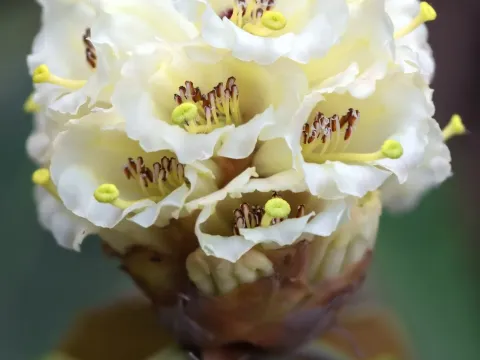
Rhododendron eximium
Rhododendron eximium
Rhododendron eximium is a distinctive evergreen shrub or small tree belonging to the Ericaceae family. Renowned for its large leaves and striking indumentum, the foliage features a thick, rusty-brown felt coating, especially on young leaves, making it a highly valued specimen in botanical collections.
What the section contains
Rhododendron eximium
Originating from the high-altitude forests of the Eastern Himalayas, specifically Bhutan and parts of India, this species thrives in cool, humid environments. It requires protection from harsh, drying winds and direct midday sun, which can cause severe foliage scorch in less-than-ideal environments.
The cultivation requirements focus heavily on soil conditions. A highly acidic substrate with a pH ranging from 4.5 to 5.5 is essential. The soil must be rich in organic matter, loose, and possess superior drainage capabilities to prevent the shallow root system from becoming waterlogged.
Agrotechnical maintenance relies on consistent mulching using pine needles, shredded bark, or leaf mold to maintain moisture levels and soil acidity. Synthetic fertilizers must be avoided, as the species is highly sensitive to alkalinity, which inhibits nutrient absorption and induces chlorosis.
In landscaping, this species is treated as a premium architectural plant, often used as a feature focal point in shaded woodland gardens. Given its ecological niche, it is generally found in specialized arboreta rather than standard nursery trade, reflecting its specific climatic demands.
Primary fungal threats include Phytophthora root rot and various leaf spot diseases, which typically emerge if the drainage is insufficient or if the humidity becomes stagnant. Preventive measures include ensuring good air circulation and avoiding overhead watering during cool evenings.
Pest management focuses on controlling the rhododendron lace bug and spider mites, which can cause significant aesthetic damage. In some cases, soil-borne larvae can threaten the health of the root zone, necessitating integrated pest management strategies to maintain plant vigor throughout the season.