
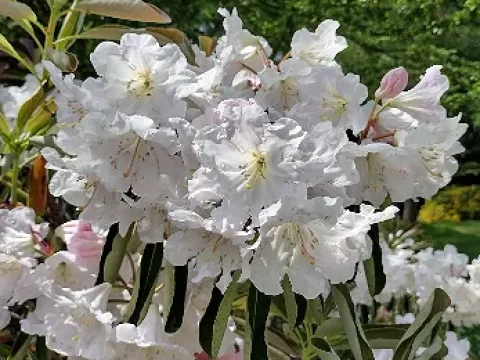
Rhododendron decorum
Rhododendron decorum
Rhododendron decorum is a magnificent evergreen shrub or small tree belonging to the Ericaceae family. Native to the mountainous regions of China, it is highly valued for its fragrant, bell-shaped flowers and attractive, leathery foliage.
What the section contains
Rhododendron decorum
This species thrives in acidic, well-draining soils rich in organic matter. A pH level between 4.5 and 5.5 is essential for the plant to properly absorb nutrients; otherwise, it will quickly develop chlorosis and stunted growth.
In terms of light, the plant prefers partial shade. Direct, intense sunlight can scorch the leaves and dehydrate the shrub, while heavy shade may significantly reduce the quantity and quality of flower production each season.
Proper water management is critical for this crop. Because its root system is shallow and fibrous, it requires constant moisture, yet it cannot tolerate waterlogging, which often leads to root rot and fatal infections.
Gardeners should apply a thick layer of organic mulch, such as pine needles or peat, around the base. This practice helps maintain soil acidity, retains moisture, and protects the delicate surface roots from temperature fluctuations.
Phytophthora root rot is the most serious threat to Rhododendron decorum. It typically occurs in poorly drained soils and is often irreversible, making prevention through soil aeration and good drainage the primary management strategy.
Powdery mildew can affect the foliage, especially in environments with high humidity and stagnant air. Keeping the plant properly spaced and avoiding overhead watering during cool, damp weather helps mitigate this risk significantly.
Pests like the rhododendron bug can cause visible damage by feeding on the leaf undersides. This causes the foliage to lose its vibrant color and become mottled, which undermines the plant's overall health and decorative value.
Spider mites are common in hot and dry climates. Periodic inspections of the leaves are recommended, and if an infestation is detected, insecticidal soap or specific miticides should be applied to control the population.
Finally, winter hardiness must be considered. In regions with severe frosts, protection with breathable materials is necessary to prevent bud damage and desiccation, ensuring a strong start during the spring growth phase.