
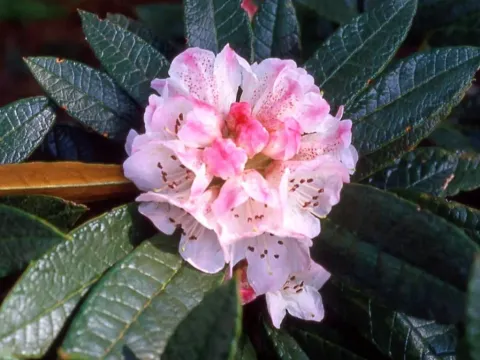
Rhododendron crinigerum
Rhododendron crinigerum
Rhododendron crinigerum is a notable evergreen shrub belonging to the Ericaceae family. It is native to the high-altitude regions of Southwestern China, flourishing in alpine and subalpine zones.
What the section contains
Rhododendron crinigerum
This species requires specific environmental conditions, thriving best in cool, humid climates. It performs optimally when sheltered from direct, intense sunlight, which can cause leaf scorch.
The soil must be acidic, well-draining, and rich in organic matter. Gardeners often amend the soil with pine bark or peat moss to maintain the necessary low pH level for healthy growth.
Botanically, this shrub is recognized by its dense, glandular bristles on the stems and leaves, providing a distinct texture and protective adaptation for high-mountain life.
Successful management includes consistent moisture levels and shallow planting depth, as the root system is delicate and prone to suffocation if buried too deep or left in standing water.
Common pathological issues include Phytophthora root rot and powdery mildew, both of which are exacerbated by poor drainage and stagnant air conditions around the foliage.
Pests such as rhododendron lace bugs and spider mites are frequent adversaries. These insects feed on the underside of leaves, causing yellowing and a decline in vigor.
Integrated pest management is crucial; it involves maintaining plant vigor through proper nutrition and frequent monitoring of the leaf undersides for early signs of infestation.
Fungal control involves the application of appropriate fungicides during the growing season, specifically when weather conditions are warm and humid, promoting spore development.
Regular sanitation of the area, including the removal of dead leaves and pruning of diseased branches, helps reduce the population of pathogens and insect overwintering sites.