
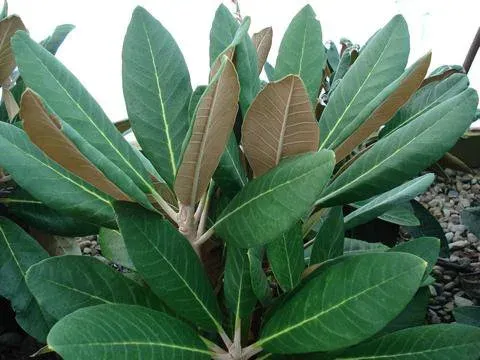
Rhododendron fictolacteum
Rhododendron fictolacteum
Rhododendron fictolacteum is a magnificent evergreen shrub belonging to the Ericaceae family, widely recognized for its robust growth and striking ornamental value. Native to the high-altitude forests of Southwestern China, this species thrives in environments characterized by cool, misty conditions and high humidity.
What the section contains
Rhododendron fictolacteum
Botanically, it is distinguished by its large, leathery leaves which feature a thick, rufous to brown indumentum on the underside. During the flowering season, the plant produces impressive trusses of bell-shaped flowers, typically white or pale pink with dark blotches, which create a significant visual impact.
To cultivate this plant successfully, one must provide a highly acidic, well-draining soil rich in organic matter. A mixture of pine needles, peat, and coarse sand is ideal to mimic the natural forest floor conditions. Avoid compacted soils, as the plant's delicate root system is prone to suffocation.
Climate requirements for this species are specific: it prefers cool, temperate regions with minimal extreme heat. Planting in a location that offers dappled shade is essential to protect the foliage from direct sun scorch and to maintain consistent soil moisture throughout the peak growth season.
In landscape architecture, Rhododendron fictolacteum is often utilized as a focal point in woodland gardens or as part of larger collection plantings. Because of its size and evergreen habit, it provides year-round structure and texture, making it a valuable asset for sophisticated garden designs.
The primary threats to this species include fungal pathogens like Phytophthora, which can cause root rot in poorly drained soils. Improving soil drainage and ensuring adequate air circulation around the canopy are the best preventive measures to reduce the incidence of these destructive diseases.
Insect pests, such as aphids, spider mites, and rhododendron leafhoppers, may occasionally infest the plants. Management involves using horticultural oils or systemic insecticides, applying them in the early stages of infestation to protect the integrity of the foliage and overall plant health.