
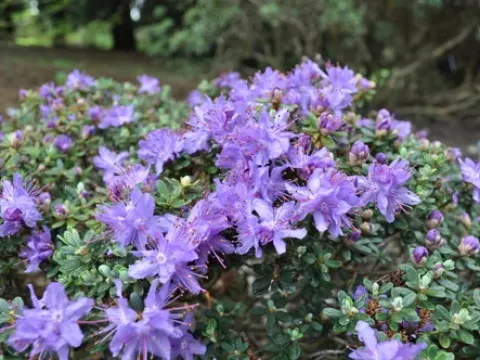
Rhododendron fastigiatum
Rhododendron fastigiatum
Rhododendron fastigiatum is a compact, slow-growing evergreen shrub belonging to the Ericaceae family. Native to the high-altitude regions of Yunnan, China, it thrives in rocky, alpine environments and is highly valued in horticulture for its diminutive, tidy form.
What the section contains
Rhododendron fastigiatum
The plant is characterized by its stiff, upright stems and small, greyish-green leathery leaves. During the spring bloom, the shrub is covered in clusters of funnel-shaped, violet-blue flowers, creating a vibrant display in rock gardens and alpine beds.
Cultivation success depends heavily on mimicking its natural habitat. The soil must be well-drained, porous, and strongly acidic, with an ideal pH level between 4.5 and 5.5. Adding peat moss, pine needles, or decomposed compost helps maintain the necessary acidity and moisture levels.
It prefers a cool, temperate climate with protection from the harsh midday sun. While it is hardy, the plant performs best when sheltered from drying winter winds and excessive heat, making it an excellent candidate for partially shaded areas of the landscape.
Regular maintenance involves light pruning immediately after flowering to maintain the shrub's shape. Due to its shallow root system, the soil should be kept consistently moist but never waterlogged; mulching with organic material is essential for root protection.
Fungal diseases, including root rot and petal blight, are significant threats to the health of Rhododendron fastigiatum, especially in poorly drained soils. Improving drainage and ensuring good airflow around the plant are critical steps in disease prevention.
Insect pests, such as the rhododendron bug, spider mites, and vine weevils, can cause noticeable damage to foliage and roots. Integrated pest management strategies, involving both biological controls and targeted chemical treatments, are recommended for infestation control.
Nutritional deficiencies, specifically iron chlorosis, often occur when the soil pH rises above the optimal range. Regular testing of soil acidity and the use of iron chelate supplements are common remedies to restore the deep green color of the foliage.
Environmental stress, such as drought or extreme temperature fluctuations, can weaken the plant, making it more susceptible to opportunistic pathogens. Consistent irrigation and adequate shelter during the first years of growth are vital for establishing a robust root system.
Winter care is vital in regions with cold climates. While the species is cold-tolerant, covering it with burlap or evergreen boughs can prevent damage caused by winter sun and dry winds, which often lead to leaf scorch in early spring.