
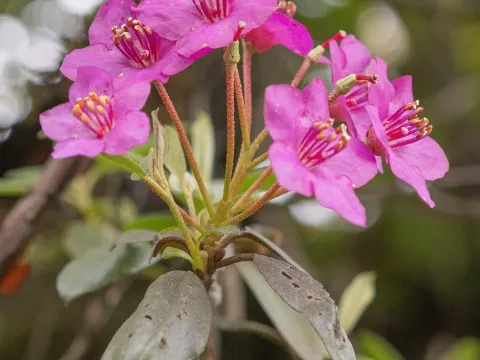
Bailey's rhododendron
Rhododendron baileyi
Bailey's rhododendron (Rhododendron baileyi) belongs to the Ericaceae family. It is a slow-growing, evergreen shrub species native to the high-altitude regions of the Himalayas, specifically Bhutan and neighboring Tibet.
What the section contains
Bailey's rhododendron
To cultivate this plant successfully, one must mimic its natural alpine environment. It thrives in well-drained, acidic soils and requires a humid atmosphere. Proper drainage is the most critical factor to prevent root rotting.
The plant prefers partial shade, as the direct intensity of midday sun can scorch its delicate foliage. It is best placed in positions that offer shelter from harsh, drying winds while maintaining good air circulation.
Soil management involves using organic amendments such as peat, composted pine needles, or leaf mold to ensure low pH levels. Mulching the base of the plant is essential for temperature regulation and consistent moisture retention.
In terms of agricultural and horticultural utility, it is strictly an ornamental crop. Its unique scale-covered leaves and clusters of bell-shaped flowers make it a prized specimen for rock gardens and woodland landscapes.
The plant is susceptible to various fungal pathogens, notably Phytophthora root rot, which is common in poorly drained substrates. Excessive soil moisture often serves as a trigger for these destructive diseases.
Pest pressure primarily comes from the rhododendron leafhopper and spider mites. These pests feed on the underside of the leaves, resulting in stippling, chlorosis, and, in severe cases, leaf drop.
Integrated pest management should focus on early detection. Regular inspections of the foliage and the application of horticultural oils or systemic insecticides can effectively mitigate damage during the growing season.
Fungal issues are managed through cultural practices such as improving site drainage and avoiding overhead irrigation. If infection occurs, systemic fungicides should be applied according to the specific pathogen.
Maintaining plant vigor through appropriate fertilization with acid-forming nutrients helps the shrub resist environmental stressors and reduces the likelihood of severe pest or disease outbreaks.