
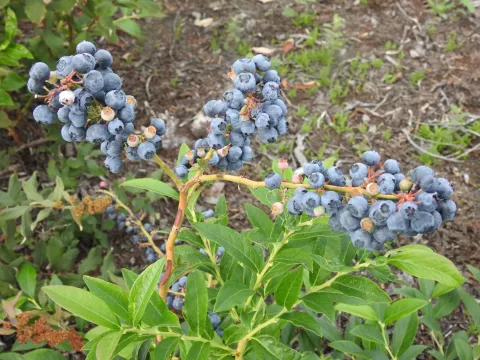
Atlantic blueberry
Vaccinium atlanticum
Vaccinium atlanticum, commonly known as the Atlantic blueberry, belongs to the Ericaceae family. It is a native North American shrub characterized by its adaptability to specific woodland and heathland environments.
What the section contains
Atlantic blueberry
The plant thrives exclusively in acidic soil conditions, typically requiring a pH between 4.0 and 5.0. Gardeners or farmers must ensure a well-draining, organic-rich growing medium, often amended with peat moss or pine bark.
Climate requirements include moderate temperatures and consistent moisture levels. The species is susceptible to drought, so maintaining soil hydration is vital for sustaining its shallow root system.
Botanically, it features leathery, deciduous leaves and a branching habit that allows it to form dense, productive colonies. Its growth cycle is synchronized with seasonal temperature shifts, making it well-adapted to temperate climates.
Agricultural use focuses on its berries, which are nutrient-dense and sought after for their health benefits. Due to its genetic background, it is frequently involved in research aimed at increasing the resilience of cultivated blueberry varieties.
Fungal pathogens such as Monilinia blight and various leaf spots are primary threats, especially in humid conditions where air circulation is restricted.
Pests including leafrollers, aphids, and certain types of mites frequently attack the tender foliage, leading to physiological stress and reduced photosynthetic efficiency.
Root rot is a significant concern for this species, triggered primarily by waterlogged soil conditions that prevent adequate root oxygenation.
Integrated pest management strategies should include regular monitoring, the use of disease-resistant mulches, and strategic pruning to open the canopy for better airflow.
Proactive management of the soil moisture and nutritional profile is essential to prevent secondary infections and ensure the longevity of the plant stand.