
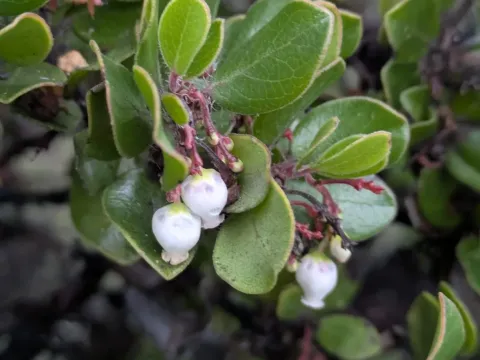
Arctostaphylos nummularia
Arctostaphylos nummularia
Arctostaphylos nummularia, commonly known as coin-leaf manzanita, is an evergreen shrub belonging to the Ericaceae family. It is characterized by its prostrate or low-mounded habit and small, circular, glossy leaves that give the plant its distinctive appearance.
What the section contains
Arctostaphylos nummularia
Native to the coastal ranges of California, this species thrives in acidic, well-draining soils derived from sandstone or granite. It is highly specialized to nutrient-poor environments and does not tolerate high-alkaline conditions or heavy fertilizers.
The cultivation of this species requires a site with full sun exposure to maintain its compact growth form and prevent sparse foliage. Proper drainage is the single most critical factor; the root system is extremely sensitive to waterlogged conditions, which are typically fatal.
Climatically, it prefers the temperate conditions found along the coast, characterized by cool, wet winters and warm, dry summers. It is not well-suited for extreme continental climates with deep freezes, as the plant tissue is prone to windburn and frost damage.
In practice, Arctostaphylos nummularia is frequently used in rock gardens, native plant displays, and as a slope stabilizer. Its slow growth rate makes it an excellent choice for low-maintenance landscaping where evergreen cover is desired throughout the year.
The most significant threat to Arctostaphylos nummularia is Phytophthora root rot, a fungal pathogen that thrives in moist, poorly drained soils. Once established in the root zone, it leads to rapid decline and death of the entire plant.
Powdery mildew can occur during periods of high humidity and stagnant air. To prevent this, spacing plants to allow for airflow is essential, and overhead irrigation should be avoided to keep the foliage as dry as possible during the night.
Insect pests such as aphids and scale insects are common opportunistic feeders on this shrub. While they do not usually kill the plant, they can stunt growth and provide entry points for secondary infections or encourage sooty mold growth.
Chemical control should be approached with caution, as Ericaceous plants are sensitive to many common pesticides. Integrated pest management (IPM) practices, including hand-removal and targeted horticultural oils, are the preferred methods of control.
Environmental stress, particularly soil pH imbalance, is a common hidden threat. If the soil becomes too alkaline, the plant loses its ability to uptake iron, leading to chlorosis. Maintaining a pH between 5.0 and 6.0 is vital for the long-term health of the shrub.