
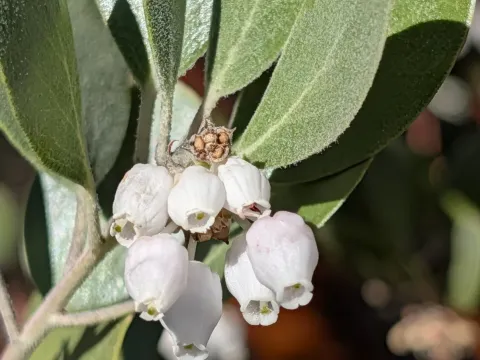
Arctostaphylos pungens
Arctostaphylos pungens
Arctostaphylos pungens, commonly known as pointleaf manzanita, is an evergreen shrub belonging to the Ericaceae family. Native to the mountainous regions of Mexico and the Southwestern United States, it is highly adapted to arid environments and rocky, nutrient-poor substrates.
What the section contains
Arctostaphylos pungens
The plant exhibits remarkable resilience to drought, utilizing a deep root system to access water in soils where other species would fail. Its botanical morphology includes leathery, sharp-pointed leaves that significantly reduce transpiration rates, helping the plant conserve moisture in harsh conditions.
In terms of soil requirements, this species thrives in acidic soils with a pH ranging from 4.5 to 6.0. Proper drainage is the most critical factor for successful cultivation; the plant will not tolerate waterlogged roots, which often lead to immediate decline and root rot.
Exposure to full sunlight is necessary for optimal growth and to maintain the plant's characteristic dense habit. While tolerant of poor soil fertility, the plant benefits from a well-aerated environment that prevents the accumulation of pathogens in the soil profile.
Economically, A. pungens is valued for its phytochemical profile, specifically its concentration of arbutin, used in traditional and modern medicinal applications. In landscape management, it is highly regarded for its soil-binding properties and its ability to function in water-wise, sustainable gardening projects.
The primary threats to pointleaf manzanita are fungal diseases resulting from improper site selection, particularly where water stagnation occurs. Phytophthora root rot is the most common pathology that can devastate an entire plantation if soil drainage is inadequate.
Insect pests are generally not a major concern due to the plant's high tannin content, which acts as a natural deterrent against herbivory. However, in enclosed or poorly ventilated settings, aphids may colonize succulent new growth, necessitating cautious management.
Effective management includes maintaining proper spacing between individuals to encourage air circulation and reduce humidity levels around the foliage. Regular pruning of dead or diseased branches is essential to prevent the spread of fungal spores during wet weather conditions.
Integrated Pest Management (IPM) practices are recommended over the broad-spectrum use of chemicals. Cultural control methods, such as maintaining appropriate soil moisture levels and ensuring adequate sunlight, serve as the best defense against potential outbreaks.
Constant monitoring is vital for detecting early signs of disease symptoms. Once a plant shows significant evidence of root or stem infection, it should be promptly removed and destroyed to minimize the risk of inoculum spread to neighboring plants.