
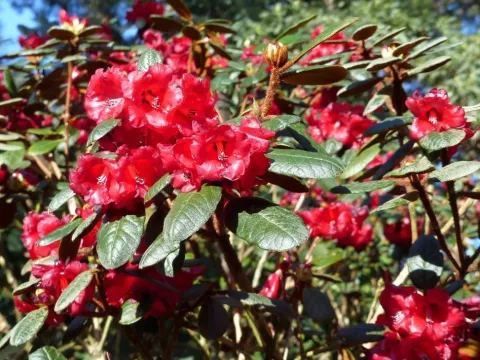
Bean's rhododendron
Rhododendron beanianum
Rhododendron beanianum is a distinguished evergreen shrub belonging to the Ericaceae family. Native to the high-altitude regions of Southeastern Tibet and Northeast India, this species is well-adapted to cool, misty environments and mountainous forest terrains.
What the section contains
Bean's rhododendron
The plant is characterized by its stiff, elliptic leaves, which feature a distinct tomentose (hairy) indumentum on the underside. This botanical trait serves as a crucial adaptation to high humidity and helps protect the plant against excessive transpiration.
Cultivating this shrub requires strict adherence to environmental conditions. It thrives in semi-shaded locations protected from harsh winds and direct midday sun, which can cause leaf scorch and dehydration, especially in warmer lowland gardens.
The soil profile is the most critical factor for success. The plant mandates a highly acidic substrate with a pH range of 4.5 to 5.5. A mixture composed of peat moss, pine bark, and coarse sand provides the necessary drainage and acidity levels required for root health.
Water management is essential, as the roots are sensitive to both waterlogging and drought. Consistent irrigation with soft, lime-free water is recommended, combined with regular mulching to keep the root zone cool and moisture-retentive throughout the growing season.
Pathogenic threats include various fungal diseases such as Phytophthora root rot, often triggered by poor soil aeration and water accumulation. These conditions lead to rapid wilting and, if untreated, the eventual death of the specimen.
Insects like the rhododendron lace bug (Stephanitis rhododendroni) are primary pests. They feed on the underside of the leaves, causing chlorosis and a sickly appearance that detracts significantly from the plant's ornamental value.
Effective management strategies involve a combination of biological and chemical controls. Maintaining good cultural practices—such as avoiding overhead watering in the evening and ensuring proper spacing between plants—minimizes the risk of fungal outbreaks.
During winter months, particularly in regions prone to frost, providing temporary shelter or heavy mulching is necessary to prevent deep soil freezing. This practice helps the rhododendron maintain its vigor and flower bud formation for the following year.
In terms of хозяйственное использование (landscaping), Rhododendron beanianum is highly valued by collectors and enthusiasts for its unique leaf texture and striking blooms. It is best placed in specialized ericaceous gardens or as an architectural element in woodland landscaping.