
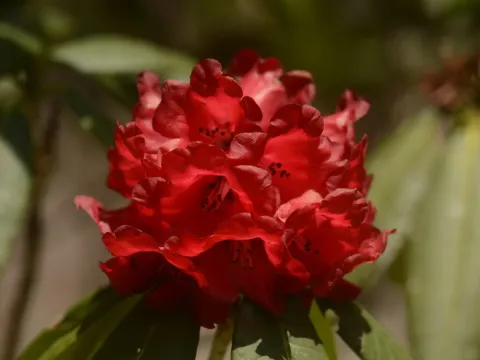
Barbatum rhododendron
Rhododendron barbatum
The Barbatum rhododendron (Rhododendron barbatum) is a distinctive evergreen shrub or small tree belonging to the Ericaceae family. Native to the Himalayan region, it is highly valued for its striking, bristly stems and vivid red flower clusters that emerge early in the spring season.
What the section contains
Barbatum rhododendron
Botanically, the species is distinguished by its exfoliating bark and stiff, hair-like bristles that cover its young shoots and leaf stalks. The foliage is dark green, leathery, and persistent, providing year-round visual interest. The inflorescences are densely packed, often displaying brilliant shades of crimson.
This species requires specific soil conditions, specifically acidic, well-draining, and humus-rich environments. The pH level should ideally be between 4.5 and 5.5. Planting in heavy clay without proper soil amendments or drainage layers can quickly lead to root asphyxiation and eventual plant decline.
Climate requirements for Rhododendron barbatum include a cool, temperate environment with high humidity. It performs best in partial shade, sheltered from harsh midday sun and strong, drying winds. Consistent moisture is essential, and moisture-retentive mulch is recommended to regulate soil temperature.
In landscaping, it is used as a magnificent specimen plant or within woodland-style garden borders alongside other acid-loving species. Due to its unique appearance, it often serves as a focal point in specialized collections of botanical gardens and private estates requiring specific site conditions.
Primary threats to this shrub include fungal diseases like Phytophthora root rot and leaf spots, which are typically triggered by poor drainage or high humidity. Over-irrigation is the most common mistake, leading to saturated root zones and promoting the growth of opportunistic fungal pathogens.
Common insect pests include the rhododendron bug and spider mites, which can cause significant damage to the leaves by piercing the epidermis. This feeding behavior often manifests as silvering or yellowing of the leaf surface, which reduces the plant's photosynthetic capacity and overall health.
Effective pest control involves a combination of biological monitoring and chemical intervention using systemic insecticides. Keeping the plant vigorous through proper nutrition and hydration significantly improves its natural resistance to insect colonization and disease outbreaks.
Sanitation practices, such as removing fallen leaves and pruning dead or diseased branches, are vital for preventing the spread of diseases. Ensuring proper spacing between plants in a garden setting promotes better air circulation, which is crucial for minimizing the buildup of moisture on foliage.
Integrated pest management (IPM) should be prioritized to maintain the ecological balance around the shrub. By focusing on root zone health and avoiding soil compaction, growers can minimize the need for heavy pesticide applications while ensuring the long-term success of the Rhododendron barbatum.