
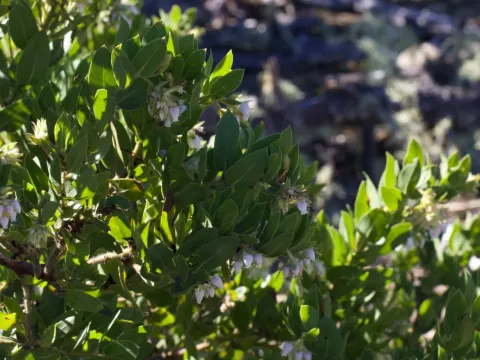
Arctostaphylos virgata
Arctostaphylos virgata
Arctostaphylos virgata, commonly known as Marin manzanita, is an evergreen shrub within the Ericaceae family. It is native to the coastal scrub environments of California, exhibiting high resilience in its natural habitat.
What the section contains
Arctostaphylos virgata
The plant thrives in well-draining, acidic, and sandy soil types. Adequate soil aeration is crucial for the health of its root system, as this species is highly susceptible to root rot in saturated conditions.
It prefers a Mediterranean climate characterized by mild, wet winters and warm, dry summers. The species is well-adapted to drought conditions once it has established itself in the landscape.
Cultivation sites should receive full sun exposure to maintain the plant's characteristic structure and healthy foliage. While it can tolerate partial shade, excessive shade often results in sparse branching and reduced flowering.
Agricultural practices for this shrub are simple, primarily involving the maintenance of a proper drainage system and occasional pruning to remove dead or diseased woody tissue.
Root rot caused by Phytophthora pathogens remains the most significant threat to Arctostaphylos virgata, especially in gardens with poor drainage.
The foliage can be susceptible to powdery mildew during humid spells or in microclimates where air circulation is restricted around the shrub's canopy.
Pests such as aphids may occasionally colonize tender new growth during the spring, which can stress the plant if the infestation becomes heavy.
Preventative management involves avoiding overhead irrigation and ensuring that the soil is never allowed to remain waterlogged for extended periods.
Integrated pest management strategies are recommended, focusing on maintaining plant vigor through proper environmental control rather than chemical interventions.