
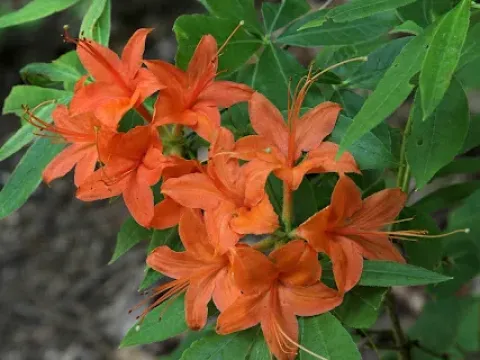
Baker's azalea
Rhododendron bakeri
Rhododendron bakeri, commonly known as Baker's azalea, is a deciduous shrub belonging to the Ericaceae family. Native to the mountainous regions of the southeastern United States, it is widely appreciated in horticulture for its vibrant blooms and unique foliage.
What the section contains
Baker's azalea
Successful cultivation of this species depends heavily on soil composition. It requires highly acidic, well-draining soil rich in organic matter. Gardeners often use a mixture of peat moss, pine bark, and sand to create the ideal growing medium with a pH between 4.5 and 5.5.
The choice of planting site is critical; while Baker's azalea thrives in dappled sunlight, it should be protected from intense afternoon sun, which can dehydrate the plant and scorch its leaves. A location under high-canopy trees is usually considered perfect.
Moisture management is a cornerstone of its care. The root system is shallow and sensitive to drought, necessitating consistent irrigation. During dry spells, supplemental watering is required to ensure the plant maintains its vigor and buds for the next season.
Mulching is an essential practice for Rhododendron bakeri. Applying a layer of pine needles or pine bark around the base of the plant helps regulate soil temperature, suppress weeds, and maintain the necessary acidity level as the mulch decomposes.
Phytophthora root rot is one of the most serious threats, particularly in poorly drained soils. Preventing soil saturation is the primary strategy for avoiding this lethal pathogen, which often requires chemical control if the infection takes hold.
Pests such as the azalea lace bug can cause significant cosmetic and physiological damage by feeding on leaf sap. This leads to stippled, pale leaves that may eventually drop, weakening the overall health of the shrub if left untreated.
Powdery mildew may appear on the foliage during periods of high humidity and poor air circulation. Proper pruning to open up the shrub's canopy and the use of approved fungicides can effectively mitigate the impact of this common fungal infection.
Iron chlorosis is a common nutritional disorder observed when the soil pH rises above the optimal range. It manifests as yellowing leaves with green veins, requiring the application of chelated iron or soil acidifiers to correct the imbalance.
Vigilance and regular monitoring are the best tools for the gardener. Removing any dead or infected wood during the dormant season helps maintain plant hygiene and limits the nesting grounds for various pests and fungal spores.