
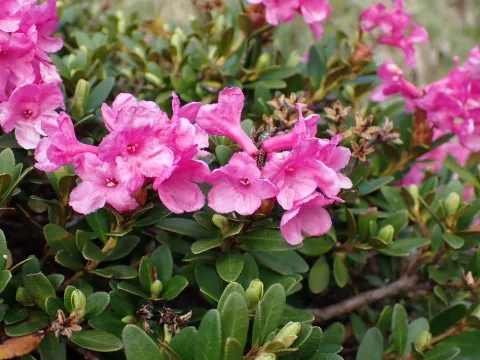
Kotschy's Rhododendron
Rhododendron kotschyi
Kotschy's Rhododendron (Rhododendron kotschyi) is a dwarf evergreen shrub belonging to the Ericaceae family. It is native to high-altitude regions of Southeast Europe, primarily in the Carpathian and Balkan mountain ranges, where it thrives in alpine heathlands.
What the section contains
Kotschy's Rhododendron
Botanically, this species is characterized by its compact, cushion-like growth habit and small, leathery leaves that remain dark green throughout the year. It produces clusters of beautiful rose-pink flowers that provide high aesthetic value during the flowering season in late spring.
The successful cultivation of this species depends on replicating its natural habitat requirements. It strictly requires acidic, well-draining soil with a pH typically ranging between 4.5 and 5.5. A mixture of peat, pine needles, and coarse sand is often recommended for garden containers or rock gardens.
Climate adaptability is limited; the plant prefers cool temperatures and moderate air humidity. In garden settings, it is best placed in a spot with partial shade to protect it from harsh midday sunlight, which can easily scorch its delicate foliage and overheat the root system.
Proper agronomic care involves consistent moisture management, ensuring the soil remains moist but never waterlogged. Mulching is a crucial practice for this species, as it helps regulate soil temperature, preserve humidity, and maintain the necessary acidic environment for root health.
Fungal diseases are the primary threat to the health of Kotschy's Rhododendron, particularly in poorly ventilated conditions. Phytophthora root rot and various leaf spot pathogens are common when the plant is subjected to excessive soil moisture or limited air circulation around the crown.
Insect pests, including the rhododendron bug and spider mites, are frequent visitors that can cause significant damage. These pests feed on the cell sap of the leaves, resulting in stippling, discoloration, and overall decline of the shrub's health if left untreated.
Preventive maintenance is essential, including regular pruning of dead or diseased branches to ensure good airflow. Maintaining an appropriate soil pH is equally important, as alkaline soil conditions can lead to nutrient deficiencies like iron chlorosis, which weakens the plant's immune system.
When pests are detected, the use of targeted systemic insecticides or horticultural oils is recommended for effective control. In cases of fungal pressure, copper-based fungicides or systemic options may be required during the early stages of the growing season to minimize damage.
Winter protection is generally not necessary in its native range, but for cultivated specimens in lower altitudes, a layer of mulch or light protective cover is beneficial. This helps prevent frost heave and protects the root zone during periods of extreme winter cold without snow cover.