
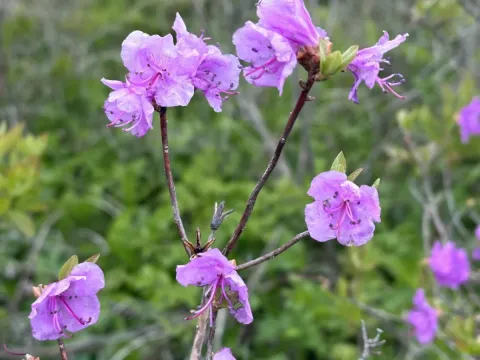
Korean rhododendron
Rhododendron mucronulatum
Korean rhododendron (Rhododendron mucronulatum) is a deciduous shrub belonging to the Ericaceae family. Native to East Asia, including Korea, China, and Japan, it is highly valued in ornamental horticulture for its early spring flowering.
What the section contains
Korean rhododendron
The culture thrives in acidic, well-draining soils with a pH level between 4.5 and 5.5. Organic matter, such as peat moss and pine needles, is essential to create a suitable environment that mimics its natural forest habitat.
Optimal site selection includes partial shade with protection from strong winds and intense afternoon sun. Proper lighting is crucial for flower bud formation, but excessive heat can stress the shallow root system.
Maintaining consistent soil moisture is vital for this species. During hot and dry summers, mulching is necessary to keep the roots cool and prevent moisture loss, while overhead irrigation should be handled with care to avoid foliage damage.
Agrotechnical practices involve using fertilizers specifically formulated for acid-loving plants. It is important to avoid deep cultivation near the base of the plant to protect the delicate, shallow roots from mechanical damage.
The primary threats include fungal pathogens such as Phytophthora root rot, which typically occurs in poorly drained soils. Improving drainage and ensuring correct moisture levels are the most effective preventive measures.
Common pests include spider mites, rhododendron bugs, and various scale insects. These pests feed on the underside of the leaves, causing discoloration and stippling, which can be managed with systemic insecticides or horticultural oils.