
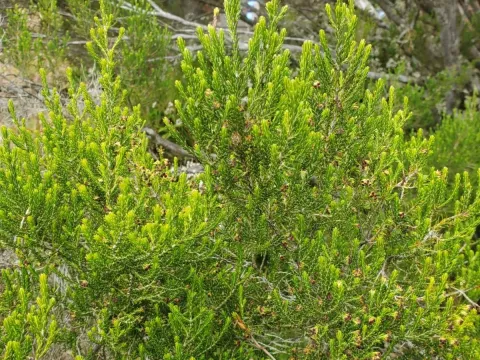
Reunion heath
Erica reunionensis
Erica reunionensis, commonly known as Reunion heath, is a shrubby perennial plant belonging to the Ericaceae family. It is endemic to Reunion Island, where it occupies specific ecological niches in high-altitude volcanic landscapes.
What the section contains
Reunion heath
Botanically, it is characterized by its evergreen nature, woody stems, and dense foliage, which are adaptations to the cool, moist, and often misty environments of its native range. The species has evolved to thrive in nutrient-poor volcanic soils.
The core requirement for cultivation is an acidic substrate with a pH typically ranging between 4.5 and 5.5. The root system is extremely sensitive to waterlogging and requires a very high level of aeration; therefore, planting in well-draining, gravelly, or peat-based soil is essential.
Regarding climate, the plant prefers consistent, moderate temperatures and high atmospheric humidity. It does not tolerate extreme heat or arid conditions, making it suitable primarily for specific temperate or sub-tropical high-altitude climates.
Agricultural management is minimal but precise. Fertilizer application must be kept to an absolute minimum, as the plant is adapted to nutrient-deficient environments. Over-fertilization can cause root burn and rapid decline in plant health.
The primary threats to Erica reunionensis are soil-borne pathogens, particularly Phytophthora and other fungi that thrive in waterlogged, compacted soils. These diseases often lead to rapid crown and root rot, which are irreversible.
Pests such as spider mites are a significant threat in environments where air circulation is poor and humidity levels fluctuate significantly. These pests can rapidly infest the fine foliage, causing severe yellowing and shedding of leaves.
Mealybugs are another common challenge in greenhouse or nursery cultivation. They often hide in leaf axils, making them difficult to detect and treat before the infestation becomes severe.
Nutrient deficiency, specifically related to iron absorption, often occurs if the soil pH shifts away from the acidic range. This creates a physiological condition known as chlorosis, which stunts growth and reduces the aesthetic value of the plant.
Preventative measures should include strict moisture control, regular monitoring of the leaf underside for pests, and maintaining the correct soil chemistry to ensure optimal plant immunity.