
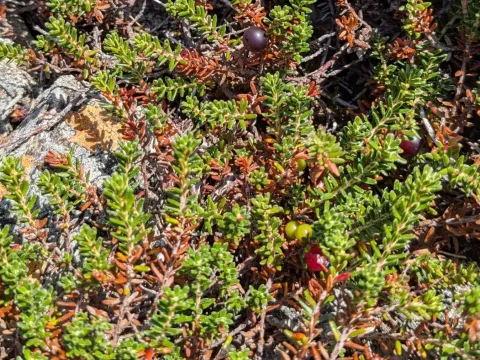
Purple crowberry
Empetrum atropurpureum
The purple crowberry (Empetrum atropurpureum) is a low-growing evergreen shrub belonging to the Ericaceae family. It is naturally distributed throughout parts of North America, where it thrives in exposed, rocky, and acidic environments, demonstrating remarkable resilience to harsh conditions.
What the section contains
Purple crowberry
In agricultural settings, the purple crowberry requires specific soil conditions to flourish. It demands acidic, well-draining soil with a high organic matter content, typically peat-based, to replicate its natural habitat. Proper drainage is essential, as the plant cannot tolerate waterlogged conditions which often lead to root rot.
The plant is highly sensitive to climate, preferring cool and moist weather patterns. Its extreme cold hardiness makes it an ideal candidate for commercial or garden cultivation in northern regions where more traditional berries might struggle to survive the winter months.
Agronomic management involves providing adequate sunlight while ensuring the soil remains cool and protected from extreme heat. Mulching with acidic materials like pine needles or peat moss is a recommended practice to maintain soil moisture levels and suppress weed growth around the root zone.
Economically, the purple crowberry is valued for its nutrient-dense berries, which are consumed fresh or processed into various health food products. Beyond its fruit production, it serves as an excellent groundcover for landscape projects in cooler climates, providing year-round greenery.
The main pathological threats to the purple crowberry include fungal infections like Botrytis (gray mold), particularly in environments with poor air circulation or prolonged high humidity. Improving spacing and ensuring adequate airflow are critical management strategies for disease mitigation.
Pest pressure is generally low, although occasional infestations of aphids or spider mites can occur, particularly in nursery or greenhouse conditions. Integrated pest management, emphasizing early detection and the use of biological controls, is preferred over chemical interventions to maintain fruit safety.