
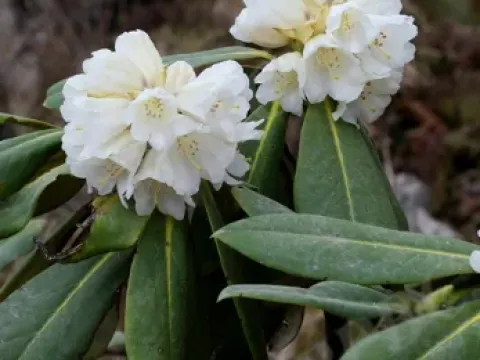
Przewalski rhododendron
Rhododendron przewalskii
The Przewalski rhododendron (Rhododendron przewalskii) is a high-altitude evergreen shrub belonging to the Ericaceae family, native to the mountainous regions of Western China. It is highly valued for its hardiness and ability to thrive in challenging, cold environments.
What the section contains
Przewalski rhododendron
The plant typically forms a dense, rounded habit, often growing between 1 to 3 meters in height. Its leaves are thick and leathery, usually featuring a distinctive indumentum (hairs or scales) on the underside, which provides protection against moisture loss and extreme cold.
Cultivation success depends on providing highly acidic soil with a pH ranging between 4.5 and 5.5. The substrate must be well-drained, porous, and rich in organic matter, such as pine bark or peat, to mirror its natural alpine habitat.
Regarding climate, this rhododendron prefers cool, humid environments with partial shade. It does not tolerate prolonged drought or heat waves, which can scorch its evergreen foliage and damage the delicate surface root system.
Maintenance involves applying a thick layer of acidic mulch around the base to keep the roots cool and moist. Proper site selection, away from harsh winds, is essential for maintaining the plant's health and aesthetic appeal in a garden setting.
Root rot is the most common threat to this species, particularly when planted in heavy, waterlogged soils that lack proper oxygen circulation for the roots.
Pests such as rhododendron lace bugs and spider mites are frequent intruders, often appearing during hot and dry spells, leading to yellowing or mottled leaf appearances.
To mitigate these threats, gardeners should implement integrated pest management, which includes manual inspection and the use of insecticidal soaps when infestations are detected early.
Fungal leaf spot diseases may occur in stagnant, high-humidity environments. Ensuring good air circulation around the canopy helps minimize the risk of pathogen development.
Preventative care through balanced watering and avoiding excessive nitrogen fertilization ensures the plant remains vigorous and less susceptible to opportunistic diseases and pest attacks.