
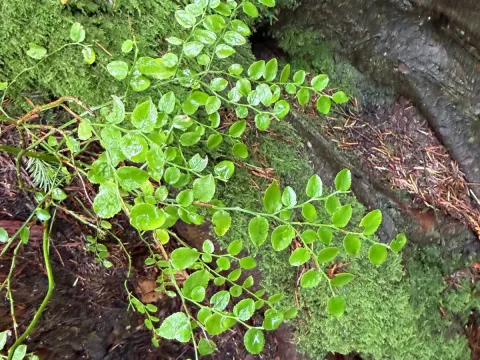
Red huckleberry
Vaccinium parvifolium
The Red huckleberry (Vaccinium parvifolium) is a member of the Ericaceae family. This deciduous shrub is native to the coastal forests of Western North America, thriving in damp, cool environments.
What the section contains
Red huckleberry
The plant requires highly acidic soil with a pH between 4.5 and 5.5 to prosper. It is typically found growing in rich, organic soil and often on decaying nurse logs in natural settings, which provides essential nutrients and drainage.
Climatic requirements involve stable moisture levels and protection from intense, direct heat. It prefers partial shade, making it an excellent candidate for woodland gardening or locations with filtered light.
A successful cultivation strategy includes consistent mulching with conifer needles or shredded bark. This practice helps maintain soil moisture levels and acidity while preventing the invasion of competing weeds.
Botanically, the plant is recognized by its distinct bright green, angular branches. It produces small, translucent red berries that are characterized by a tart, sharp flavor profile, highly sought after for culinary applications.
Root rot and other fungal diseases pose the greatest threat to this crop, particularly in poorly drained soils. Excessive water accumulation around the roots can quickly compromise the plant's health.
Pests such as aphids and leaf-rollers can infest the foliage during the growing season. Early detection and environmentally friendly management practices are essential to protect the vegetative growth.
Powdery mildew may occur if air circulation is inadequate within the planting area. Ensuring sufficient spacing between shrubs helps prevent the spread of fungal spores in humid conditions.
Birds are a major challenge during the ripening phase, as they are naturally attracted to the bright red berries. Protective netting is considered the most effective way to safeguard the harvest.
General plant health is maintained by ensuring that the growth medium mimics the forest floor environment, which naturally supports the shrub's immunity against common pathogens.
Harvesting red huckleberries requires manual collection, as the berries are delicate and do not withstand mechanical harvesting methods. Ripening typically occurs in mid-to-late summer.
Berries should be gathered once they develop a deep red color and separate easily from the branch. Selective picking over several weeks is necessary because fruits on the same plant often mature at different times.
Post-harvest handling is critical, as the fruits are perishable. Immediate cooling and careful storage are required to maintain their texture and prevent spoilage before processing.
The berries are widely used in jams, syrups, and baking due to their unique acidic taste. Beyond consumption, the plant serves an aesthetic purpose, often utilized in decorative landscape projects.
Proper harvest logistics, including collecting in the morning when fruits are cool and dry, will significantly improve the shelf life of the final product and reduce waste.