
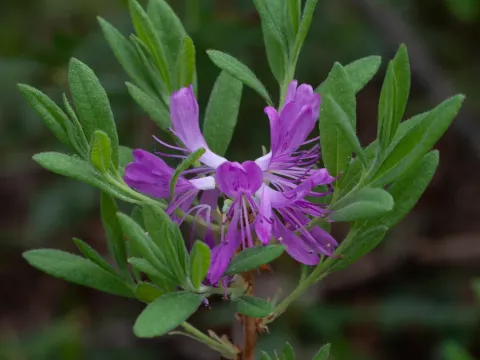
Rhododendron
Rhododendron L.
Rhododendron (Rhododendron L.) is a diverse genus of woody plants in the Ericaceae family, widely cultivated for their stunning floral displays. The genus includes both evergreen and deciduous shrubs, varying significantly in size and hardiness.
What the section contains
 Catawba rhododendron
Rhododendron catawbiense Michx.
Catawba rhododendron
Rhododendron catawbiense Michx.
 Chinese azalea
Rhododendron molle (Blume) G. Don
Chinese azalea
Rhododendron molle (Blume) G. Don
 Dwarf rhododendron
Rhododendron minus Michx.
Dwarf rhododendron
Rhododendron minus Michx.
 Indian azalea
Rhododendron indicum (L.) Sweet
Indian azalea
Rhododendron indicum (L.) Sweet
 Indian azalea
Rhododendron simsii Planch.
Indian azalea
Rhododendron simsii Planch.
 Japanese azalea
Rhododendron obtusum (Lindl.) Planch.
Japanese azalea
Rhododendron obtusum (Lindl.) Planch.
 Ledebour's rhododendron
Rhododendron ledebourii Pojark.
Ledebour's rhododendron
Rhododendron ledebourii Pojark.
 Pontic rhododendron
Rhododendron ponticum L.
Pontic rhododendron
Rhododendron ponticum L.
 Rhododendron degronianum
 Carrière
Rhododendron degronianum
Rhododendron degronianum Carrière
 Rhododendron hybrid
Rhododendron dauricum sempervirens x rhododendron carolinianum
Rhododendron hybrid
Rhododendron dauricum sempervirens x rhododendron carolinianum
 Rhododendron hybrid
Rhododendron minus carolinianum x dauricum sempervirens
Rhododendron hybrid
Rhododendron minus carolinianum x dauricum sempervirens
 Rhododendron macrosepalum
 Maxim.
Rhododendron minus
Rhododendron minus Michx. var. minus
Rhododendron macrosepalum
Rhododendron macrosepalum Maxim.
Rhododendron minus
Rhododendron minus Michx. var. minus
 Rhododendron yakushimanum
Rhododendron degronianum Carrière subsp. yakushimanum (Nakai) H. Hara
Rhododendron yakushimanum
Rhododendron degronianum Carrière subsp. yakushimanum (Nakai) H. Hara
 Royal Azalea
Rhododendron schlippenbachii Maxim.
Royal Azalea
Rhododendron schlippenbachii Maxim.
 Torch Azalea
Rhododendron kaempferi Planch.
Torch Azalea
Rhododendron kaempferi Planch.
Rhododendron
Originating primarily from the Northern Hemisphere, these plants thrive in cool, moist, and mountainous environments. They are typically found in the Himalayas, East Asia, and parts of North America, where they prefer habitats with acidic soils and high atmospheric moisture.
Success in cultivation relies heavily on soil chemistry; a low pH level (between 4.0 and 5.5) is non-negotiable. They require well-draining, organic-rich soil to prevent root asphyxiation, as their root systems are fine and easily susceptible to waterlogging.
Agricultural practices involve consistent watering, especially during drought, and the use of organic mulch such as pine needles or wood chips. This helps maintain soil temperature and moisture levels, protecting the shallow root structure from harsh climate variations.
In landscaping, rhododendrons are highly valued for their versatility in border plantings, foundation beds, and as specimens in woodland gardens. Beyond their aesthetic appeal, certain species are explored for their unique secondary metabolites in medicinal applications.
Rhododendrons face various health challenges, often triggered by poor site conditions. Fungal diseases such as anthracnose, phyllosticta leaf spot, and monilinia are common issues that cause foliage blight and can severely diminish plant vitality.
Rhizoctonia and gray mold often affect plants in stagnant air environments. Root diseases are particularly devastating, with Pythium root rot being a frequent culprit where soil aeration is insufficient and drainage is poor.
Pests like the root-knot nematode pose a severe threat by damaging the root system, leading to stunted growth. Other pests, including lace bugs and spider mites, feed on foliage, necessitating integrated pest management approaches.
Management strategy focuses on cultural control: proper spacing for airflow, careful irrigation management, and maintaining optimal soil conditions. When chemical interventions are required, they should be applied precisely to target the specific pathogen or pest.
Early identification is essential for long-term survival. Regular scouting for signs of rust or necrosis ensures that interventions can be implemented before the plant is irreversibly weakened by infection or infestation.