
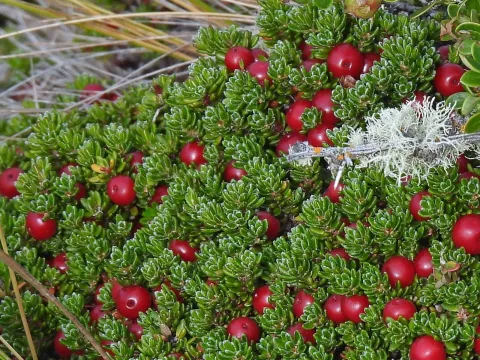
Red crowberry
Empetrum rubrum
Red crowberry (Empetrum rubrum) is a hardy evergreen shrub belonging to the Ericaceae family. It is a distinctive plant native to the cool, windswept regions of South America, primarily found in Chile, Argentina, and the Falkland Islands, where it thrives in harsh environments.
What the section contains
Red crowberry
The plant is characterized by its prostrate growth habit and needle-like, dark green leaves that are perfectly adapted to withstand strong coastal winds and low temperatures. As an acid-loving plant, it requires specific soil conditions to thrive and produce a consistent fruit yield.
Successful cultivation requires acidic, moist, and well-draining soil, ideally peat-based or sandy. It is essential to maintain a consistently cool root environment, which can be achieved through regular mulching with organic materials such as pine needles or sawdust to regulate soil temperature.
Agricultural management of Empetrum rubrum involves ensuring adequate moisture throughout the growing season. While the species is quite resilient, it does not tolerate drought or prolonged exposure to high-heat conditions, necessitating careful site selection or shading in warmer climates.
The culinary applications of red crowberry are vast, ranging from fresh consumption to processing into jams, jellies, and traditional regional beverages. The fruit is highly valued for its intense color and nutritional profile, making it a valuable crop for niche agricultural markets.
The primary threats to Red crowberry crops are fungal pathogens, specifically those causing root rot and damping-off, which often result from poor soil drainage or excessive stagnant water. Maintaining a well-aerated, acidic soil structure is the best defense against these issues.
Pests are generally minimal due to the plant's natural adaptation to rugged climates; however, soft-bodied insects like aphids or mites may occasionally affect young growth. Implementing good sanitation practices and avoiding over-fertilization help to keep the plants vigorous and resistant to stress.