
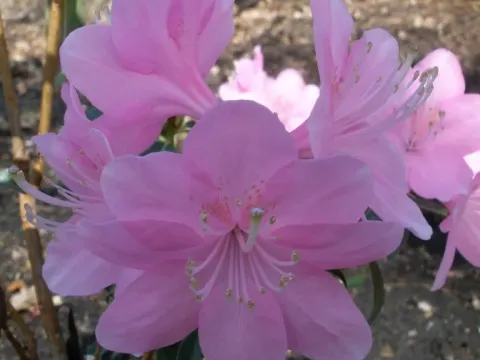
Davidson's rhododendron
Rhododendron davidsonianum
Davidson's rhododendron (Rhododendron davidsonianum) is an attractive species of the Ericaceae family, native to the mountainous regions of Sichuan, China. It is highly valued in horticulture for its floriferous habit and elegant growth.
What the section contains
Davidson's rhododendron
This species thrives in partial shade conditions, mimicking its natural mountain forest habitat. Providing protection from intense afternoon sun is essential to prevent leaf scorching and to maintain the plant's overall health.
The soil requirements are strict: the medium must be acidic, well-draining, and rich in organic matter. A mix of peat moss, pine needles, and horticultural sand is considered ideal for fostering a strong root system.
Consistent moisture is key to the success of this rhododendron. During the growing season, it is vital to keep the soil evenly moist but never waterlogged, as poor drainage is a leading cause of plant decline.
Climate adaptation involves ensuring the plant is shielded from harsh, drying winds. While it is hardy in many temperate zones, providing winter protection for young specimens is a recommended practice to avoid damage.
Common health issues for this shrub include fungal diseases like Phytophthora root rot, which typically occurs in poorly aerated or waterlogged soils. Early detection and soil management are crucial for control.
Pests such as spider mites and rhododendron bugs can significantly damage foliage. These insects feed on the sap, causing leaves to become chlorotic and reducing the plant's vigor throughout the growing season.
Cultural control includes regular mulching with pine bark or needles. This practice helps maintain soil acidity, suppresses weeds, and creates a healthy environment that discourages many common soil-borne pathogens.
Chemical intervention with systemic fungicides and insecticides should be used as a last resort. Always ensure that the products applied are safe for acid-loving ornamental plants to prevent chemical burn.
Sanitation is a vital aspect of pest and disease management. Removing and disposing of infected leaves or stems helps reduce the spore load and minimizes the chance of further infection within the garden.