
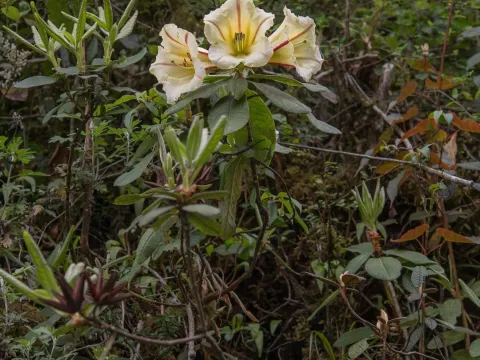
Dalhousie rhododendron
Rhododendron dalhousiae
Dalhousie rhododendron (Rhododendron dalhousiae) is a remarkable evergreen shrub species within the Ericaceae family, often growing as an epiphyte in its natural habitat. It is celebrated for its large, fragrant, trumpet-shaped flowers that emit a pleasant scent, especially during the blooming period.
What the section contains
Dalhousie rhododendron
The native distribution covers the Himalayan regions, including parts of India and Myanmar. Given its origin in high-altitude forests, the plant thrives in cool, humid environments with frequent mist, which is essential to mimic for successful cultivation in non-native climates.
The culture requires an acidic, loose, and well-drained growing medium, ideally composed of organic matter like pine needles and peat. Such a structure prevents waterlogging, which the plant is highly susceptible to, and provides the necessary acidic environment for nutrient uptake.
In terms of climate, it requires shelter from direct, harsh sunlight and cold winds. It is best suited for greenhouses or conservatories in regions where frost or high heat could threaten its survival. Maintaining a stable temperature is key to preserving the health of its foliage.
Proper management involves regular misting to keep humidity levels high and using only acidic, lime-free water for irrigation. The sensitive root system requires careful handling, and shallow planting is recommended to ensure adequate gas exchange at the surface level.
Primary health risks include fungal infections like root rot and leaf spot, typically triggered by stagnant water or poor air circulation in enclosed growing spaces. Maintaining a clean environment is crucial for disease prevention.
Pests like spider mites and scale insects are common intruders that target the foliage and stems. Integrated pest management, including regular inspection and the use of appropriate horticultural oils or pesticides, is required to maintain the aesthetic value of the specimen.