
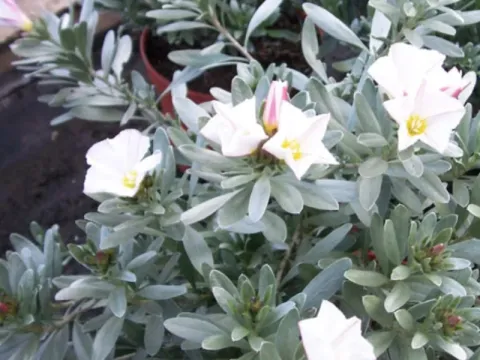
Convolvulus auricoma
Convolvulus auricoma
Convolvulus auricoma is a perennial herbaceous plant belonging to the Convolvulaceae family. It is adapted to arid and semi-arid environments, displaying significant resilience to harsh environmental conditions.
What the section contains
Convolvulus auricoma
The plant thrives in well-drained, sandy, or rocky soils. It possesses a deep root system that allows it to access water in deep soil layers, making it highly suitable for dry landscaping.
Optimal growth is achieved in full sun exposure. The species is highly photophilous and will struggle to bloom or maintain its structural integrity if grown under shaded conditions.
In terms of agricultural management, the plant requires very little fertilization. Excessive nutrient input, particularly nitrogen, can lead to uncontrolled foliage growth at the expense of floral displays.
Climatic requirements focus on heat tolerance. While it can withstand occasional frost, it is primarily suited for Mediterranean or continental climates with hot, dry summers.
Aphids represent the most common pest threat for Convolvulus species. These insects congregate on tender shoots, causing stunted growth and potential transmission of viral diseases.
Spider mites can become problematic during prolonged heatwaves. These pests thrive in dry environments and can cause rapid yellowing of the leaves if left unchecked.
Powdery mildew often manifests in stagnant air conditions. Ensuring proper spacing between plants is essential to promote airflow and minimize fungal spore germination.
Root rot is almost exclusively associated with improper drainage. Once the roots are damaged by excessive moisture, the plant's recovery chances are minimal.
Various leaf spot pathogens may appear during humid spells. Integrated pest management, including sanitation and selective pruning, is the recommended approach for control.