
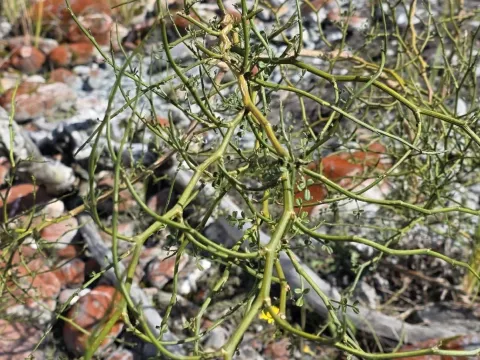
Coral broom
Corallospartium
Coral broom (Corallospartium) is a distinctive genus within the Fabaceae family, native to the high-altitude regions of New Zealand. Botanically, it is defined by its leafless, photosynthetic branches that exhibit a coral-like branching pattern, making it a unique example of adaptive evolution in arid environments.
What the section contains
Coral broom
The cultural requirements for Corallospartium are strict regarding soil texture. It thrives only in well-drained, porous soils such as rocky or gravelly substrates. Any soil compaction or moisture retention will inevitably lead to root system failure and the rapid decline of the plant.
In terms of environmental preferences, coral broom requires full solar exposure. It is highly intolerant of high humidity and prefers temperate conditions with good air circulation. In agricultural settings, it is often utilized in xeriscaping and soil stabilization projects due to its ability to survive in nutrient-poor sites.
The agronomic value of this plant lies in its nitrogen-fixing capabilities. As a legume, it contributes to the improvement of soil structure and fertility in ecological restoration programs. However, it requires a long establishment period, during which weed control is critical.
Regarding management, Corallospartium does not require intensive fertilization. In fact, excessive nutrient input can interfere with its natural symbiotic processes. Pruning should be kept to a minimum, focusing only on the removal of damaged branches to maintain its unique architecture.
The primary threat to Corallospartium is the complex of root-rotting pathogens caused by waterlogged soil conditions. Fungi such as Phytophthora are particularly destructive, as they target the root cortex, especially in poorly drained clay soils.
Pests, particularly sap-sucking insects like aphids, can severely affect the succulent stems during the growth phase. These infestations often lead to soot mold development, which hinders the photosynthetic capacity of the green stems.
Winter desiccation is another significant threat, particularly in regions where cold temperatures coincide with high moisture. The inability of the plant to manage water uptake in freezing conditions leads to necrosis of the terminal branches.
Competitive stress from aggressive invasive weeds is a major threat during the seedling stage. Because Corallospartium grows relatively slowly, it is easily overwhelmed by faster-growing vegetation if the site is not carefully managed.
Lack of proper air movement in nursery or garden settings increases the susceptibility of the plant to foliar diseases. Ensuring that the plant is situated in an open, breezy location is the most effective preventative measure against various fungal attacks.