
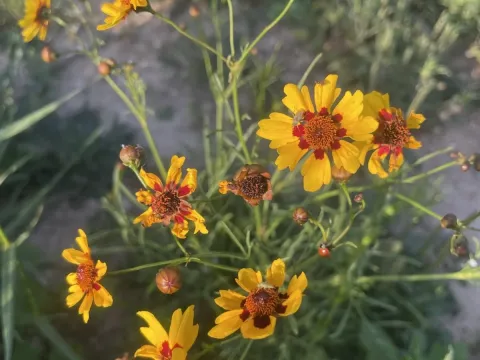
Coreopsis atkinsoniana
Coreopsis atkinsoniana
Coreopsis atkinsoniana is a member of the Asteraceae family, valued for its delicate ornamental flowers. Seeds are typically sown directly into prepared soil once the danger of spring frost has completely passed.
What the section contains
Coreopsis atkinsoniana
For early bloomers, indoor seed starting in late winter is recommended. Use a well-draining seed-starting mix and maintain a consistent temperature between 18 and 20 degrees Celsius for successful germination.
Light is essential for the germination of these seeds, so they should be only lightly pressed into the surface rather than buried deep in the soil. Keep the surface moist but not waterlogged.
Once seedlings have developed a few true leaves, they can be pricked out and transplanted into individual pots. Hardening off outdoors for two weeks before final planting helps the plants adapt to fluctuating environmental conditions.
In the field, spacing is crucial for airflow. Providing 25–30 centimeters between plants ensures each individual has enough space to develop a strong root system and healthy foliage.
Full sun exposure is the primary requirement for Coreopsis atkinsoniana. Adequate sunlight is necessary for the plant to produce abundant blooms and maintain its characteristic sturdy structure.
The plant thrives in well-drained, slightly sandy or loamy soils. It is highly adaptable but performs poorly in heavy clay or soils that retain excessive moisture for long periods.
While mature plants exhibit good drought tolerance, regular watering during the first growing season is vital. Deep, occasional watering is generally better than frequent, shallow sprinkling.
Fertilizer should be used sparingly. Over-fertilization, especially with nitrogen, promotes excessive vegetative growth at the expense of floral production and can make the plant susceptible to lodging.
Deadheading faded flowers is a highly recommended practice. This simple maintenance task redirects the plant's energy toward creating new buds, significantly extending the flowering season.
Fungal diseases like powdery mildew are the most common issue, especially in humid or stagnant air environments. These appear as white, dusty patches on the leaf surfaces.
Pests such as aphids and spider mites can attack the succulent stems and leaves. These pests thrive in hot, dry conditions and can cause significant damage if left untreated.
Effective pest management involves regular monitoring and physical removal where possible. In severe cases, the use of insecticidal soaps or horticultural oils is recommended to manage populations.
Good cultural practices, such as proper spacing and avoiding overhead watering, significantly reduce the incidence of fungal issues by keeping the foliage dry.
Proper sanitation at the end of the season involves clearing away plant debris to prevent pathogens from overwintering. This is essential for maintaining a healthy planting site for the next year.