
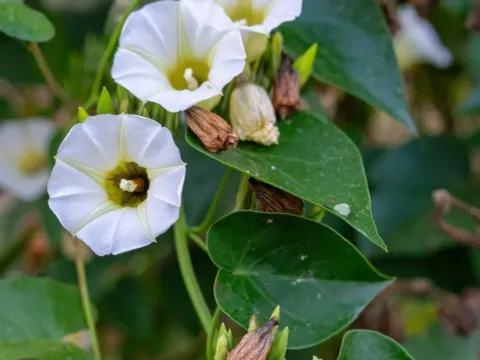
Christmasvine
Ipomoea corymbosa
The planting of Ipomoea corymbosa, commonly known as Christmasvine, is best initiated in late spring once all risks of night frost have completely passed.
What the section contains
Christmasvine
Seeds should be sown at a depth of approximately 2 cm in well-prepared, loose soil, ensuring that there is adequate space for the vines to spread.
To improve germination rates, it is highly recommended to scarify the seed coat lightly or soak the seeds in warm water for several hours prior to sowing.
If starting seeds indoors, use biodegradable peat pots to avoid root disturbance, as the species is known to be sensitive during the transplantation phase.
Once seedlings emerge, maintain a consistent environment with moderate warmth and bright, indirect light to encourage strong early-stage stem development.
As a member of the Convolvulaceae family, this species thrives in tropical and subtropical climates, requiring a sunny location to reach its full potential.
The plant demands a well-draining soil composition, ideally enriched with organic matter, to sustain its rapid growth rate and flowering requirements.
Watering frequency should be balanced to keep the soil moist but never waterlogged, as stagnant moisture is a primary cause of root system decline.
Ipomoea corymbosa performs best in temperatures between 20°C and 28°C; significantly cooler conditions will result in delayed growth and reduced vigor.
Providing robust vertical support such as trellises or wires is essential, as the twining nature of the plant requires structures for proper physical development.
Aphids and spider mites are the most prevalent pests affecting the foliage, particularly in environments where humidity levels are insufficient during the peak season.
Fungal infections, including various types of leaf spot and powdery mildew, may occur if air circulation around the vine is restricted for an extended period.
Root rot caused by Oomycetes is a significant threat in heavy, poorly drained soil, which can lead to rapid wilting and eventual death of the entire plant.
Whiteflies can also pose a problem as they not only damage the leaves but can also serve as vectors for viral diseases that affect the entire plant population.
Integrated pest management strategies, including the use of neem oil or insecticidal soaps, are effective in maintaining plant health throughout the vegetative phase.