
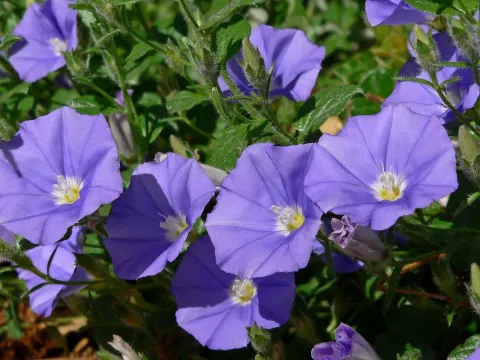
Convolvulus hybrids
Convolvulus hybrids
Convolvulus hybrids, members of the Convolvulaceae family, are typically sown directly into the soil once all risks of frost have passed and the ground is warm.
What the section contains
Convolvulus hybrids
The ideal planting window is late spring, allowing the soil temperature to stabilize, which promotes rapid germination and early establishment of the young plants.
For gardeners looking for a longer flowering season, starting seeds indoors in biodegradable pots about a month before the last frost date is highly recommended.
Seeds should be planted at a shallow depth of approximately 1 to 2 centimeters to ensure they receive enough warmth to trigger the metabolic processes necessary for growth.
Spacing is essential for these vigorous growers, so keeping individual plants about 30 centimeters apart helps manage their spread and ensures adequate air circulation.
This ornamental crop thrives in full sun exposure, requiring at least six hours of direct sunlight daily to produce its signature profusion of trumpet-shaped flowers.
Well-draining, moderately fertile soil with a neutral pH is preferred to prevent waterlogging, which the root systems of these hybrids do not tolerate well.
Regular watering is necessary during dry spells to maintain consistent soil moisture, although mature plants show remarkable resilience to brief periods of drought.
Providing a vertical support structure such as a trellis, wire, or fence is vital for the health and aesthetic presentation of this climbing plant species.
Mulching the base of the plant helps to conserve soil moisture and suppress weed growth, allowing the vine to focus its energy on flower production rather than competition.
Aphids are among the most frequent pests, particularly affecting the succulent new growth and causing the leaves to curl or turn yellow if left untreated.
Spider mites can become a significant nuisance during hot, dry summer months, appearing as fine webbing on the undersides of leaves and sucking sap from the plant.
Fungal diseases like powdery mildew are common in environments with poor air circulation or consistently high humidity, necessitating regular monitoring of foliage.
To mitigate the risk of pest outbreaks, it is best practice to keep the area around the base of the plant free from debris and excess vegetative material.
If chemical interventions become necessary, choosing systemic insecticides or horticultural oils labeled for ornamental garden use is recommended to protect plant health.