
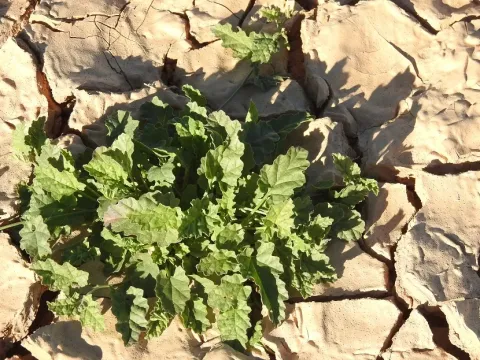
Convolvulus fatmensis
Convolvulus fatmensis
Convolvulus fatmensis is a perennial herbaceous plant belonging to the Convolvulaceae family. It is natively adapted to arid and semi-arid regions, showcasing a remarkable ability to survive in environments with limited water availability and high soil salinity levels.
What the section contains
Convolvulus fatmensis
The plant thrives best in sandy, well-drained soil types. Proper soil aeration is critical, as the species is highly susceptible to root damage when subjected to waterlogging or anaerobic conditions typical of heavy clay soils.
Climate-wise, this species prefers intense sun exposure and high thermal conditions. It is a heliophyte, meaning it requires full sun to maintain its compact growth form and to promote the development of its characteristic funnel-shaped flowers.
Botanically, the plant is characterized by a sprawling or semi-climbing habit, with leaves that possess fine pubescence. This trait serves as an adaptation to minimize water loss through evapotranspiration, allowing the plant to sustain itself during hot, dry periods.
In terms of agricultural and ecological application, Convolvulus fatmensis is valued for its potential in land rehabilitation and xeriscaping projects, where drought tolerance is a primary requirement for plant survival and site stability.
The health of Convolvulus fatmensis can be compromised by various pests, including leaf-feeding beetles and caterpillars. These insects can cause significant foliar damage, reducing the plant's photosynthetic efficiency during critical growth stages.
Fungal pathogens such as powdery mildew represent a significant threat, especially if humidity levels fluctuate or if the canopy is too dense, preventing proper air circulation. Maintaining dry foliage is a primary preventative strategy.
Root rot is the most common pathology associated with poor soil management. When the root zone remains wet for extended periods, it fosters the growth of soil-borne fungi that can cause sudden wilting and eventual death of the plant specimen.
Cultural control methods, such as regular inspection and the removal of infected plant debris, are essential for maintaining a healthy population. These practices help to interrupt the lifecycle of common pathogens and pests.
Integrating chemical control should only be considered as a last resort, as the species may be sensitive to certain compounds. Prioritizing environmental conditions that favor the plant over the pathogens is the most effective approach to integrated pest management.