
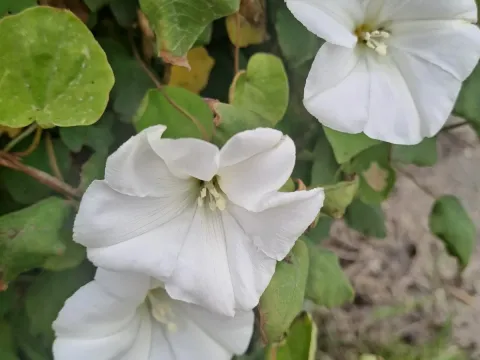
Calystegia tuguriorum
Calystegia tuguriorum
Calystegia tuguriorum, commonly known as New Zealand bindweed, is a perennial flowering vine belonging to the Convolvulaceae family. It is native to New Zealand and parts of South America, typically found in coastal forests and shrublands where it utilizes surrounding vegetation to reach sunlight.
What the section contains
Calystegia tuguriorum
The plant is characterized by its slender, twining stems and large, white, bell-shaped flowers. It is widely valued in horticulture for its rapid growth rate and ability to quickly cover trellises, fences, or pergolas, providing a lush green appearance during the growing season.
Cultivation requires a position in full sun to partial shade with well-drained, fertile soil. While it is adaptable to various soil types, it performs best in moisture-retentive loamy soils enriched with organic matter, which supports its vigorous development and flowering.
Agrotechnical maintenance includes providing sturdy vertical supports to guide the climbing stems. It is crucial to monitor its spread, as the rhizomatous root system can be aggressive, potentially becoming invasive if not properly contained within the landscape design.
In temperate zones, the plant requires winter protection. Covering the root zone with organic mulch helps maintain soil temperatures and prevents severe frost damage to the rhizomes, ensuring the vine returns with renewed vigor the following spring.
Aphids represent the most common pest challenge for Calystegia tuguriorum, often clustering on the tender tips of climbing stems. Regular inspection and the use of insecticidal soaps are usually sufficient to manage these populations and prevent damage to the foliage.
Powdery mildew is a frequent fungal threat, particularly in environments with poor air circulation or high humidity. Ensuring proper spacing between plants and avoiding overhead watering during cool evenings significantly reduces the risk of leaf infection.
Root rot is a physiological condition induced by poor soil drainage. When the roots remain waterlogged, they become susceptible to pathogens, leading to yellowing of leaves and eventual plant death. Correcting drainage is the primary method of treatment and prevention.
Spider mites may affect the vine during hot, dry summer months. These microscopic pests feed on cell sap, leaving white stippling on leaves. Increasing air humidity through misting or using appropriate miticides helps maintain the plant's health.
To ensure long-term viability, gardeners should prune back dead growth each spring. This practice promotes fresh, healthy development and prevents the accumulation of old, diseased plant material that could harbor pests and spores over the winter.